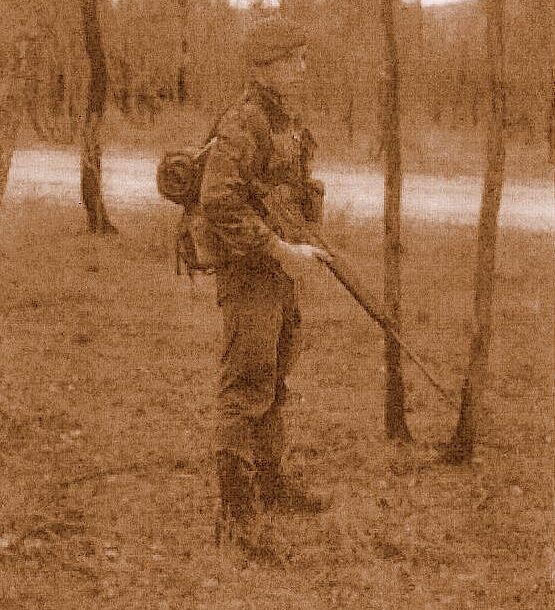
He had justly become a media target of vindictiveness over the years since Hoddle Street. However, what has been morally wrong is that in the latter years of his sentence as he was approaching the end of this sentence and set to be eligible for parole in 2014, a relentless media campaign in Victoria made him a political target of the incumbent an unelected Napthine Liberal-National coalition Government in the lead up at the time.
Julian Knight since his due parole eligibility in 2014 has been denied parole application and placed in indefinite detention in incarceration in then maximum security Port Phillip Prison at the time. This was that Victorian (draconian) Parliamentary Act that overruled the Judiciary:
 Loading...

 Reload document
  Open in new tab
That Act was in breach of the principle of the ‘separation of powers’ (between the Judiciary, the Legislature and the Executive (i.e. Government) as enshrined in the Constitution of Australia of 1901.
Upon such time Julian Knight became legally no longer a criminal prisoner of the Judiciary, but a political prisoner of the Victorian State Legislature. Despite Julian’s and legal appeal protests/challenges against this Act of Victorian Parliament, his plight was repeatedly dismissed by various legal avenues – Parole Board, an appeal to the High Court of Australia, appeal to the United Nations Human Rights Council.
Read More:
So in frustration with Julian Knight’s due legal processing having been usurped by the politics of the day, on 5th January 2015 Julian drafted and submitted a written plea for mercy to the then Governor of Victoria, Alex Chernov AC, QC whom in his official office role represented The Queen of the United Kingdom, being the Head of State of the State of Victoria within the Commonwealth of Australia.
Following due formal process, Julian wrote via the Governor’s Official Secretary Mr Charles Curwen, CVO, OBE, as follows, in Julian Knight’s own words:
[From]
<< Mr Julian Knight
Port Phillip Prison
DX-39334
LAVERTON
5 January 2015
(To) His Excellency Alex Chernov AC, QC
Governor of Victoria
DX21-0670
MELBOURNE VIC 3000
Attention:
Mr Charles Curwen, CVO, OBE
Official Secretary
RE: PETITITON OF MERCY
Dear Sir,
I submit for your consideration a petition seeking the exercise of the Royal prerogative of mercy with respect to my head sentence of life imprisonment.
Royal Prerogative of Mercy
In light of the circumstances described below, I ask that you extend mercy to me pursuant to sections 106 and 107 of the Sentencing Act 1991 (Vic).
I note that the provisions of s.107 allow you to extend mercy and order that I be released either on giving an undertaking or on parole. In relation to an undertaking given under s.107(2)(a), I further note that you may impose ‘any other condition that the Governor considers to be in the interests of the person or the community’ [my emphasis].
The power in s.107(2) reflects the unfettered power given to the Adult Parole Board of Victoria, pursuant to s.74(5)(a) of the Corrections Act 1986 (Vic), to impose on a parole order ‘additional terms and conditions’ as it deems fit.
I also note that s.106 provides that; ‘This Act does not affect in any manner Her Majesty’s royal prerogative of mercy.’
Personal History
In 1985, I obtained my Higher School Certificate at Melbourne High School.
In 1986, I briefly attended La Trobe University as an undergraduate student in the Bachelor of Arts degree course. During 1986, I also served as a trooper in the 4th/19th Prince of Wales’s Light Horse Regiment.
In 1987, I was a staff cadet at the Royal Military College, Duntroon. My offences were committed 16 days after my discharge from the Australian Army.
Original Crime & Sentence
On 9 August 1987, I committed the Hoddle Street shootings in Clifton Hill, Melbourne. As a result of my actions 7 people were killed and 19 were wounded.
I was 19-years-old at the time of my offending.
I had no criminal record prior to my arrest for the offences I committed in Hoddle Street.
On 28 October 1988, I plead guilty to 7 counts of murder and 46 counts of attempted murder before the Honourable Hampel J in the Supreme Court of Victoria at Melbourne.
Senior Crown Prosecutor John “Joe” Dickson QC led the Crown at my plea hearing, and the defence was lead by Mr Robert Richter QC.
As part of my plea agreement with the Crown, it was agreed that no evidence of any “bastardization” I had been subjected to at Duntroon would be led during my plea hearing. Following the establishment of the Defence Abuse Response Taskforce (“DART”) in 2012, and the denial of my request for a tentative date for release on parole on 29 June 2012, I made a lengthy submission to the DART regarding the “bastardization” I was subjected to at Duntroon. With the denial of a further request for a tentative date for release on parole on 9 December 2013, and the introduction of s.74AA into the Corrections Act 1986 (Vic) in 2014, I filed both an application for criminal injuries compensation and a personal injuries claim in the ACT Supreme Court relating to the injuries I sustained at Duntroon. In addition to these ongoing civil proceedings, these matters are now also the subject of a criminal investigation by the ACT Police.
On the second day of my plea, 31 October 1988, his Honour raised the question of whether I would have relied upon the partial defence of diminished responsibility had it been available in Victoria. The following exchange took place between his Honour and Mr Richter QC (Transcript, R v Knight, Monday 31 October 1988, at page 99):
Such a defence would have, if it had been available and been successfully pleaded, reduced all charges of murder to manslaughter. The maximum sentence for manslaughter in Victoria is 20 years (see s.5, Crimes Act 1958 (Vic)). It is a partial defence that has been successfully plead by mass killers Gregory Brown, Paul Evers and Andre Chayna in New South Wales, and by Barry Williams in England (see below). None of those individuals has received a maximum sentence of more than 25 years.
The setting of a minimum non-parole term was not opposed by the Crown during my plea hearing. On the first day of the plea the Crown stated that; “We do not submit, Your Honour, that it would be inappropriate for Your Honour to fix a minimum sentence in this case” (Transcript, R v Knight, Friday 28 October 1988, at page 89). On the second day of the plea counsel for the Crown again said in relation to the setting of a minimum term that, “I repeat, as I said the other day, we do not submit it would be inappropriate to do so” (Transcript, R v Knight, Monday 31 October 1988, at page 111).
On 10 November 1988, I was sentenced to a total effective sentence of life imprisonment with a minimum non-parole term of 27 years (see R v Knight [1989] VR 705). In fixing a minimum term, Hampel J found (at 711) that:
In my view, the fixing of a minimum term in this case is appropriate because of your age and your prospects of rehabilitation, as well as the other mitigatory factors I have already mentioned which justify some amelioration of your sentence, not only in your interest, but in the interest of the community.
In sentencing me Hampel J noted (at 711) that the Crown “did not contend that a minimum term should not be fixed.”
The minimum non-parole term granted to me was not appealed by the Crown.
The minimum term given to me was ‘part of the sentence’ (see s.11(1), Sentencing Act 1991 (Vic)).
The minimum term – after which I could expect, given the history of the parole of convicted murderers in Victoria, to be considered by the Adult Parole Board for conditional release on parole – was at that time due to expire on 8 August 2014. With the granting of a number of “emergency management days” (EMD) pursuant to the Corrections Act 1986 (Vic) ‘on account of good behaviour while suffering disruption or deprivation during an industrial dispute,’ and 3 EMD for meritorious conduct in trying to save a fellow inmate’s life in 2000, my minimum term expired on 8 May 2014.
In 2007, the Honourable Justice George Hampel, by then retired and a law professor at Monash University’, told the Herald Sun newspaper that: “The judgment sets out all my thinking about the case. I really don’t have much to add, and my views haven’t changed” (see “Hoddle St judge firm on Knight”, by Norrie Ross, Herald Sun, 9 August 2007, page 8 – available at www.news.com.au/heraldsun/story/0,21985,22212953-661,00.html). His Honour also rejected a suggestion that if my crimes had been committed now, a minimum term would be unlikely to be set. He said that: “I would have some doubt about that. I’m not saying he would or he wouldn’t. I don’t think I’d categorically say he wouldn’t.”
In 2011, former Supreme Court judge and Chairman of the Adult Parole Board, the Honourable Justice Frank Vincent, commented to The Sunday Age newspaper that my sentence, “was then and now a very lenient one.” Justice Vincent, however, also pointed out that, “the board does not and cannot in principle say that because a minimum term was set too low we will … increase the period” (see “Parole row looms on Hoddle St murderer”, by Peter Munro, The Sunday Age, 3 July 2011, page 5).
Despite his Honour’s comments, it appears from my circumstances, my treatment in prison and recent retrospective legislative amendments that the prevailing opinion amongst the executive, the legislature and the judiciary in Victoria is that I was undeserving of a minimum term and that I should have been given a ‘whole-of-life’ sentence.
My sentence is now only the 33rd highest sentence in Victoria; there are 21 other murderers serving longer minimum terms than mine.
I am currently the fifth longest serving prisoner in Victoria, but I am now the only life sentence prisoner with a minimum term from the 1980s who remains in maximum security. I was granted a medium security rating in mid-1999 and held that rating for the next 3½ years but I was never moved out of maximum security prisons. I was again given a medium security rating in late 2012 but that rating was raised back to maximum security after the introduction of s.74AA into the Corrections Act 1986 (Vic) in mid-2014 (see below). By the time that s.74AA was introduced I had served longer continuously in maximum security than any other prisoner with a release date in Victoria’s history. The only prisoners who have served longer continuously in maximum security (Paul Haigh and Ray Edmunds) are both serving ‘whole-of-life’ sentences.
My repeated attempts to have the Supreme Court of Victoria intercede on my behalf in relation to my lack of progression through the prison system have been unsuccessful (see Knight v Anderson [2007] VSC 278; 16 VR 532 & Knight v Hastings [2012] VSC 203). Similarly, my repeated attempts prior to the introduction of s.74AA to have the Supreme Court of Victoria intercede on my behalf in relation to obtaining a tentative date for release on parole were unsuccessful (see Knight v Adult Parole Board [2012] VSC 23 & Knight v Adult Parole Board [2013] VSC 97). In refusing leave in Knight v Adult Parole Board [2012] VSC 23, Osborn J found (at 14(a)) that amongst the reasons for refusing relief was that:
There are a series of reasons for regarding Mr Knight’s application as fundamentally deficient: (a) The relief sought is with respect to the grant of parole as such. Mr Knight is not yet eligible for parole. The ultimate appropriateness of a parole order will fall to be determined upon the basis of the circumstances as they are when Mr Knight becomes eligible.
The Sentencing of Multiple & Mass Killers
Australia
The claim that if I was sentenced today I would not receive a minimum term is a claim that is not substantiated when sentences handed down since 1988 are examined. A number of multiple (3+ deaths) and mass (5+ deaths) killers throughout Australia have had minimum terms set on life sentences.
In Victoria, Gregory Brazel was sentenced on 28 March 2003 to life imprisonment with a minimum term of 27 years on his third conviction for murder. In 1992 and 1993 he received set terms of imprisonment for two murders committed in 1990. He later confessed to a third murder for which he received the Life/27 years sentence, later reduced to Life/22 years on appeal. His total effective sentence, however, amounts to Life/35 years when time already served is taken into account.
Serial killer Paul Denyer was only 20-years-old when he killed three women over six weeks in mid-1993 in Melbourne’s bayside suburb of Frankston. Originally sentenced to life imprisonment in 1993, his appeal in 1994 was upheld by Victoria’s Court of Appeal, who set a minimum term of 30 years (see Denyer [1995] 1 VR 186; (1994) 74 A Crim R 47). (* I predict that Denyer will be the only other prisoner in Victoria to be subjected to legislative changes to detain him in prison beyond his EED, and that every other eligible convicted murderer before and after us will be released on or near their EED).
On 21 August 1993, 25-year-old gun enthusiast John Lascano killed three people in a gun shop in Springvale, Melbourne. In 1994, he was sentenced to life imprisonment with a minimum term of 27 years. His appeal against that sentence was dismissed in 1995 by Victoria’s Court of Appeal (see R v Lascano, unreported, Court of Appeal of Victoria, 7 December 1995; BC9502546). Lascano was progressed to a medium security prison in March 2005 after serving 11½ years.
In 2005, Robert Farquharson was charged with killing his three sons. At his first trial in 2007 he was convicted and sentenced to life imprisonment. A successful appeal resulted in a retrial in 2010 in which he was again convicted and sentenced to life imprisonment but this time he received a minimum term of 33 years.
Melbourne’s so-called “Gangland War” between 1996 and 2007 resulted in a number of individuals being convicted of multiple killings.
The first was Victor Brincat, convicted of three murders and sentenced to life imprisonment with a minimum term of 23 years on 14 March 2006.
Two months later, on 3 May 2006, career criminal Keith Faure was convicted of two murders and sentenced to life imprisonment with a minimum term of 19 years. Faure had already served terms of imprisonment for two counts of manslaughter and for his part in the armed robbery and murder of a Thornbury jeweller in 1987.
On 19 July 2006, Carl Williams was convicted of one murder and received a set term of imprisonment. On 7 May 2007, he finally plead guilty to four other murders and received a sentence of life imprisonment with a minimum term of 35 years.
Brincat and Faure had both agreed to become Crown witnesses and testify against their co-offenders before they were sentenced, while Williams was providing police with information in the hope of receiving a sentence discount when he was murdered in Barwon Prison on 19 April 2010.
In New South Wales, Sam Constantinou was arrested in 1983 over three murders he committed in 1982. Sentenced to life imprisonment in 1984 he received a minimum term of 30 years in 1999.
In New South Wales in 2003, Kathleen Folbigg was convicted of murdering three of her children (aged between 8 and 19 months) and the manslaughter of a fourth child (aged 19 days). On 24 October 2003, she was sentenced to 40 years imprisonment with a 30-year minimum non-parole term in the Supreme Court of NSW. On 17 February 2005, however, the Court of Criminal Appeal upheld her appeal against sentence and re-sentenced her to 30 years imprisonment with a 25-year minimum non-parole term.
In South Australia, Alistair “Sandy” MacRae was convicted on 4 July 1997 of a double murder committed in Adelaide in 1985, and was sentenced to life imprisonment with a minimum term of 36 years. MacRae had previously been convicted of two other murders committed in Victoria during 1984-1985. At his first trial in 1989 he was sentenced to life imprisonment with a minimum term of 18 years, later reduced to 16 years on appeal. At his second trial he was sentenced to life imprisonment with a minimum term of 26 years (see MacRae (1995) 80 A Crim R 380; BC9507301 & BC 9604913)).
One of South Australia’s Snowtown murderers, James Vlassakis, was convicted of 4 of the 12 Snowtown “bodies in the barrels” murders and sentenced to life imprisonment in 2001. In 2003 he received a minimum term of 26 years.
Western Australia’s most notorious example of a multiple murderer receiving a minimum term was the 1993 case of William Mitchell. On 22 February 1993, 24-year-old Mitchell killed four people – a woman and her three children – on a farm at Greenough. Originally sentenced to life imprisonment with a minimum term of 20 years, a Crown appeal against leniency was upheld by the WA Court of Criminal Appeal in 1994 and the minimum term was revoked. In 1995, however, the High Court of Australia overturned that decision and reinstated the minimum term (see Mitchell (1995) 184 CLR 333; (1996) 85 A Crim R 304).
In the Northern Territory, on 18 August 1983, 36-year-old truck driver Douglas Crabbe drove a semi-trailer into the Inland Motel at Ayers Rock leaving 5 dead and 16 injured. At his second trial in 1985 he was convicted of 5 counts of murder and sentenced to life imprisonment (see R v Crabbe (1984) 11 FCR 1; 56 ALR 733; R v Crabbe (1985) 156 CLR 464; R v Crabbe (1990) 101 FLR 133). On 8 December 2004, the Chief Justice of the Northern Territory set a minimum term of 30 years (see Crabbe [2004] NTSC 63; (2004) 188 FLR 209).
In Queensland, on 23 June 2000, 37-year-old Robert Long set fire to the Palace Backpackers Hostel in the town of Childers, leaving 15 dead and 20 injured. In 2002 he was convicted of murder and sentenced to life imprisonment with an effective minimum term of 22 years. An appeal against conviction and a Crown appeal against the leniency of the sentence were both dismissed by the Queensland Court of Criminal Appeal in 2003.
Overseas
A number of multiple and mass killers overseas have had minimum terms set on life sentences. In Canada, on 24 August 1993, 53-year-old university professor Valery Fabrikant committed a mass shooting at Concordia University in Montreal, Quebec, which left 5 dead and 1 wounded. In 1994 he was sentenced to life imprisonment with a minimum term of 25 years.
In Israel, on 20 May 1990, 21-year-old Israeli soldier Ami Popper opened fire on a group of Palestinians waiting at a bus stop in the town of Rishon le Zion, killing 7 and wounding 15. In 1991 he was sentenced to life imprisonment but in 1994 that sentence was commuted to 40 years.
In Sweden, on 11 June 1994, 24-year-old army officer Mattias Flink ran amok with an assault rifle in Falun, leaving 7 dead and 3 wounded. He shot at police before he was eventually shot and wounded and taken into custody. In 1995 he was sentenced to life imprisonment in Sweden’s Supreme Court. In 2010 he received a minimum term of 32 years in the Örebro District Court but later that year the Court of Appeal increased the term to 36 years. Flink is, however, eligible for parole after 24 years.
It needs to be noted that Sweden, contrary to any public perception that Scandinavian countries are “soft on crime”, hands down more life sentences per capita than Australia. In 2008 (when Sweden’s population was 9,000,000) there were 170 people serving life sentences in Swedish prisons. In Victoria in 2008 (when Victoria’s population was 5,364,000) there were 45 people serving life sentences. This equates to 1 life sentence prisoner for every 52,941 Swedes and 1 for every 119,200 Victorians. The difference between Sweden and Victoria lies not in their criminal justice systems or in their tabloid media but in their prison systems. Although Flink’s crime and sentence are similar to my own, he started temporary leaves from prison in 2007 after having served only 13 years of his sentence. In Victoria convicted murderers are now only eligible for unescorted temporary leaves from prison in the final 12 months of their sentence.
The Sentencing of Spree Killers
Aside from those who have committed multiple or mass shootings in Victoria, individuals who have embarked on shooting sprees that did not result in multiple deaths have received minimum terms on life sentences.
In 1985, 19-year-old Kai Korhonen shot dead an unarmed security guard then wounded 3 police officers as he evaded capture in Melbourne’s south-eastern suburbs. Sentenced to a mandatory life sentence on 20 May1986, he subsequently received a minimum term of 15 years pursuant to a s.18A application (see below) and was released. He was later returned to custody after absconding interstate and overseas for almost a decade but was re-paroled after a few months (see “Gunn operator to track fugitives”, by John Silvester, The Age, Saturday 2 February 2013, page 24).
On 3 August 1999, 38-year-old Jonathon Horrocks went on a shooting rampage at La Trobe University that left a man dead and two others wounded. On 5 October 2000, Horrocks was sentenced to life imprisonment with a minimum non-parole term of 23 years (see BC200006734). In July 2009, he was progressed to a medium security prison after serving 10 years.
The Punishment of Murderers in Victoria Since 1836
Contrary to popular belief, most murderers were not executed when capital punishment was in force in Victoria. From the settlement of Victoria as the Port Phillip District in 1836 to the last execution in 1967, there were 186 executions in Victoria but only 142 of those were for murder (see Ivan Potas & John Walker, “Trends and Issues in Crime and Criminal Justice”, No 3, Capital Punishment, Australian Institute of Criminology, Canberra, February 1987, Table 1, & Dr Peter J. Lyn & George Armstrong, “From Pentonville to Pentridge: A History of Prisons in Victoria”, State Library of Victoria, Melbourne, 1996, Appendix 1 – pages 202-207 * NB: ages are not recorded for the first 54 executions that took place during the period 1842-1857).
Only three of those hung for murder after 1857 were teenagers: all were 19-years-old (David Gedge on 11 November 1863, Elijah Cockroft on 12 November 1894 & James Williams on 8 September 1904).
During the 20th Century only 23 people were hung for murder in Victoria, including a US serviceman hung by the US military authorities at Pentridge Prison (Private Edward Leonski on 9 November 1942), one triple hanging (Robert Clayton, Norman Andrews & Jean Lee on 19 February 1951) and the hanging of one man since pardoned on the ground of innocence (Colin Ross on 24 April 1922).
During 1928-1987, only 11 convicted murderers were executed in Victoria but 88 were released from prison. Of those released, the average period in custody was 14 years (22 were released after serving 5-10 years, 30 after serving 10-15 years & 23 were released after serving 15-20 years – see In the Matter of a Minimum Term Application Pursuant to s.18A of the Penalties & Sentences Act 1985 by Rodney Paul Schultz, Peter John Lawless & Hans Kumar Sharma, unreported, Supreme Court of Victoria, Gray J, 6 March 1987; BC8700635, page 6).
During 1965-1974, when there was only 1 execution in Victoria (Ronald Ryan on 3 February 1967, the last execution in Victoria & in Australia) 17 prisoners convicted of murder had their death sentences commuted to set periods of imprisonment (see R v Jolly (1990) 52 A Crim R 83, at 89). All of them were eventually released and none of them served longer than 27 years, 5 months.
The Release of Murderers in Victoria Since 1836
Since 1836 every convicted murderer in Victoria who has been eligible for a “ticket of leave”, a conditional pardon (a release on licence) or a minimum non-parole term has been released.
During the operation of the “ticket of leave” system between 1850 and August 1860, 20-43% of a prisoner’s sentence was served by way of a “ticket of leave” (see Arie Freiberg & Stuart Ross, “Sentencing Reform & Penal Change: The Victorian Experience”, The Federation Press, Leichhardt, 1999, pages 9-10).
The “ticket of leave” system was replaced by a system of absolute remissions where up to ¼ of a prisoner’s sentence was reduced. From 1 July 1908, indeterminate sentences were introduced, with an Indeterminate Sentences Board to administer them, pursuant to the Indeterminate Sentences Act 1907 (Vic) (Freiberg & Ross, op.cit., pages 12-16). The Indeterminate Sentences Board was eventually abolished in 1957 following the establishment of the Adult Parole Board of Victoria.
From 1 July 1957, the Penal Reform Act 1956 (Vic) established the modern Adult Parole Board of Victoria, the first parole system in Australia (Freiberg & Ross, op.cit., page 16, & see Adult Parole Board of Victoria, “Fifty Years of the Adult Parole System in Victoria 1957 to 2007”, Carlton, Melbourne, July 2007, page 3). The Board was required to review all prisoners serving sentences, except those prisoners who had been convicted of murder and had their mandatory death sentences commuted to life imprisonment or to a set number of years. These prisoners were released by way of executive action (i.e. a release on licence pursuant to a granting of the royal prerogative of mercy).
In the 57 years since the establishment of the Adult Parole Board of Victoria in 1957, every prisoner convicted of murder and given a minimum term – including those originally sentenced to death or given a mandatory life sentence – has been released after becoming eligible for parole.
To date, no prisoner serving a life sentence with a minimum term for murder has served more than 17 months beyond his EED before being released on parole.
The fact is, ‘from the inception of sentencing in Victoria, a sentence of imprisonment was rarely, if ever, served in full’ (Freiberg & Ross, loc.cit., page 10). It is also a fact that, ‘In Victoria, approximately 86 percent of prisoners are released within three months of their expected eligibility date, … and this rate has been relatively stable over the years’ (Freiberg & Ross, loc.cit., page 177, source: Office of Corrections, “Corrections Master Plan”, Neilson Associates, Melbourne, 1983, page 256). The 2010-2011 annual report of the Adult Parole Board confirmed that up to 90% of prisoners are granted parole at their earliest eligibility date (EED) for release on parole (see Adult Parole Board of Victoria, “Annual Report 2010-2011” & “Get out of jail card: Nine out of 10 inmates given parole as soon as possible”, by Geoff Wilkinson, Herald Sun, 2011, page 3).
When the mandatory death sentence for murder was abolished in Victoria in 1975 it was replaced with a mandatory sentence of life imprisonment. This remained the sentence for murder in Victoria until the passage of the Penalties and Sentences Act 1985 (Vic). Following the passage of this Act the sentence for murder became either life imprisonment or life imprisonment with a minimum non-parole term or imprisonment for a set number of years.
The Crimes (Amendment) Act 1986 (Vic) was assented to on 20 May 1986, amending the Penalties and Sentences Act and authorizing the Supreme Court of Victoria to fix a minimum term of imprisonment for any person who on 1 July 1986 was serving a term of imprisonment for the term of his or her natural life. At this time there were 119 prisoners serving life imprisonment for murder: excepting those that died in custody, all bar 2 had minimum terms set and have been released. Of the 2 prisoners who have not had a minimum term set (Ray Edmunds & Paul Haigh), both had their applications for a minimum term refused. The last prisoner of the pre-1986 “Lifers” waiting to have his application heard (Bobby Barron) died in Thomas Embling Forensic Hospital on 11 August 2013 after serving 39 years.
Of the 78 applications for a minimum term (known as “s.18A applications”) heard during 1986-1989, 76 resulted in terms set of 14 years or less, 1 term was 16 years (for a double murder) and 1 was for 17 years (for a triple murder) (see Bugmy v R (1990) 169 CLR 525, at 538 per Dawson, Toohey & Gaudron).
Aside from the fact that no murderer since 1836 eligible for a “ticket of leave”, a pardon or with a minimum non-parole term has been denied release, other pertinent facts are that:
-
- No released convicted murderer has served longer than 27 years and 5 months in prison (Bill O’Meally).
- The second longest serving released murderer served 26 years and 11 months (Keith Ryrie – see Ryrie (1993) 64 A Crim R 332 (CCA); BC9300642).
- No released murderer has served more than 17 months beyond his earliest eligibility date for release on parole (Robert Pickford).
- No murderer convicted of committing murder as a teenager has been denied a release date.
- No released murderer convicted as a teenager has served more than 21½ years in prison (viz. Christopher Lowery & Charles King).
The Release of Multiple & Mass Killers
A number of multiple (3+ deaths) and mass (5+ deaths) killers have been released both in Australia and overseas.
Australia
In Australia, a number of offenders who were convicted of killing 3-15 people have served varying terms of imprisonment before being released. Practically all of them are not even remembered by the public or have their cases revisited by the media.
Myron Kelly bombed a policeman’s house in NSW in 1957, killing the policeman and two others. He served 33 years.
Clifford Bartholomew killed 10 members of his extended family at Hope Forest near Adelaide in 1971. Originally sentenced to death he had his sentenced commuted and ended up serving only 8 years, 3 months before being released in 1979. Until the Port Arthur massacre in 1996, Bartholomew’s crime was the worst mass shooting in Australia’s history. Who now has even heard of Clifford Bartholomew?
On 8 March 1973, the “Whisky-Au-Go-Go” nightclub in Brisbane was set alight and 15 people died in the ensuring blaze. Two men were convicted of setting the fire and were sentenced to life imprisonment. One of the men died in prison but the other, James Finch, was released in 1988 in a blaze of publicity after serving 15 years and was then deported to the UK.
Another notorious multiple murderer deported to the UK after serving his sentence was Archibald McCafferty. Over three days in August 1973, McCafferty committed three murders in Sydney. Sentenced to life imprisonment in 1974, he was an accomplice to the murder of another prisoner in 1981 and was convicted of his manslaughter in 1983. He became eligible for parole in 1993 but fought his deportation. In 1997, after serving 23½ years, he was finally released and deported back to his native Scotland (see McCafferty v Minister for Immigration & Ethnic Affairs (1995) 61 FCR 275; BC9502015. See also McCafferty v Offenders Review Board, unreported, Court of Criminal Appeal of NSW, 19 June 1995; BC9504950).
On Christmas Day 1975, an arsonist set fire to the Savoy Private Hotel in King’s Cross, Sydney. The ensuing blaze left 15 dead and 20 injured. In 1976 the arsonist, Reginald Little, was convicted of four representative counts of murder and sentenced to life imprisonment. He was released some years ago.
On 15 July 1977, the anti-drugs campaigner Donald Mackay was murdered in Griffith, NSW. His body was never found. Two years later two drug couriers were murdered in Melbourne. The man convicted of these three contract killings, James Bazley, was arrested in 1980 and later sentenced to life imprisonment. In 1992 a minimum term of 11 years was set but in 1993 a Crown appeal against the leniency of this sentence was upheld and it was increased to 15 years (see Bazley (1993) 65 A Crim R 154). In 1995 he was released without revealing where Mackay’s body is or what happened to it.
In 1977, Berwyn Rees killed two people during the robbery of a gun store in Sydney but evaded apprehension. Three years later he killed a police sergeant and wounded a constable during his arrest near Mount Sugarloaf in NSW. Sentenced to life imprisonment in 1981 he received a minimum term of 27 years in 1993. He was released in 2007 after serving that term.
The most infamous bombing in Australia’s history – that of the Hilton Hotel in Sydney – occurred in the early hours of 13 February 1978. Two council workers and a policeman were killed in the blast. In 1989, Evan Pederick surrendered to police and confessed to planting the bomb. Later that year he received a sentence of 20 years with a 13½ year minimum term after agreeing to testify against a supposed accomplice. He later appealed against his conviction, but his appeal was unsuccessful and he served his minimum term and was released in 2003.
On 24 September 1978, Daniel Lovec killed three – including his wife and their 6-year-old son – and wounded a fourth during a mass shooting in South Australia. In 1979 he was sentenced to life imprisonment and in 1987 had a minimum term of 18 years set by the Supreme Court of SA. An appeal against that sentence was unsuccessful, and in 1996 he was released after having served 18 years.
The Hoddle Street shootings were not the first mass shooting in Victoria. On 24 January 1924, Norman List ran amok with a rifle in the Royal Botanic Gardens in Melbourne. After shooting dead three people and wounding a fourth he fled the scene. On 1 February 1924, his body was found in a creek at Pakenham after he apparently committed suicide by drowning himself.
On 21 May 1980, Sulejman Kraja opened fire with a revolver in a corridor in the Supreme Court of Victoria, killing three and wounding two others. He only stopped shooting when he ran out of bullets, and he was tackled by a bystander outside the court. The following year he was sentenced to life imprisonment but in 1993 he received a minimum term of 24 years. An appeal against that sentence in 1994 was unsuccessful (see R v Kraja, unreported, Court of Criminal Appeal of Victoria, 11 November 1994; BC9401295), and in 2004 he was released after serving his minimum term.
Today most Victorians know of Rob Farquharson, the father convicted of killing his three sons and sentenced to life imprisonment with a minimum term of 33 years. No-one, however, remembers Josephine Zikos, who in September 1982 killed her husband and their three children. Found not guilty by reason of insanity she was sentenced to Governor’s Pleasure and was released back into the community some years later (see In the Matter of the Estate of Nickolaos Zikos , unreported, Supreme Court of Victoria (Probate), Nathan J, 31 March 1987; BC8700621).
On 7 February 2009, Australia experienced the worst bushfires in its history; 173 people died in the “Black Saturday” bushfires in Victoria. Three months later, on 30 April 2009, Australia’s worst convicted arsonist was quietly released from Port Phillip Prison. Gregory Brown was released after serving 18 years and 9 months – his entire sentence. Of the more than 200 fires he had lit in his lifetime, some were lit in Victoria on 16 February 1983 – “Ash Wednesday”. On 17 September 1989, he set fire to the Downunder Backpackers Hostel in Sydney. The resulting inferno killed 6 people and injured 18 others (an almost identical death and injury toll as the Hoddle Street shootings). Not arrested until 1990, he successfully plead diminished responsibility in the Supreme Court of NSW (a partial defence not available in Victoria) and was convicted of 6 counts of manslaughter instead of murder. He was sentenced in relation to those counts and in relation to other fires to a total of 16 years. His appeal against that sentence was dismissed by the Court of Criminal Appeal of NSW (see R v Brown, unreported, Court of Criminal Appeal of NSW, 20 February 1995; BC9504405). He was later transferred to Victoria to face multiple counts of arson relating to fires he lit – including some of the “Ash Wednesday” fires – in Victoria. He became eligible for parole in 2001 but refused to undergo any form of psychiatric assessment or to undergo programs designed to address his offending behaviour. He sought to obtain a ‘straight release’ from prison (i.e. with no parole conditions) which he achieved at the end of April 2009. A belated application by the Department of Human Services to have him subjected to a guardianship order was rejected by VCAT on 29 April 2009 (see AC (Guardianship) [2009] VCAT 753), and he was released the next day. His release was not reported until a week later (see “Exclusive: Killer among us – Australia’s worst arsonist is ‘sure to strike again’ but VCAT says he free to do what he wants”, by Keith Moor, Herald Sun, 2 May 2009, page 3).
Another killer to successfully plead diminished responsibility to multiple counts of murder was Paul Evers. On 30 August 1990, Evers went berserk with a shotgun in a block of flats in Surry Hills, Sydney, and shot dead 5 people. In 1992 he was convicted of five counts of manslaughter on the grounds of diminished responsibility and sentenced to 25 years imprisonment with a minimum term of 18 years. His appeal against that sentence was unsuccessful (see R v Evers, unreported, Court of Criminal Appeal of NSW, 16 June 1994; BC9301748) and he was released in 2008.
Andre Chayna also plead diminished responsibility to multiple counts of murder in NSW. On 12 November 1990, she stabbed to death her sister-in-law and her 8-year-old daughter and hid their bodies. Two days later she stabbed to death her 9-year-old daughter. The bodies were discovered the next day and she was arrested. She was found guilty of three counts of murder by a jury in the Supreme Court of NSW, but on 15 February 1993, the Court of Criminal Appeal upheld her appeal against those convictions and substituted verdicts of manslaughter. On 8 June 1993, the Court of Criminal Appeal re-sentenced her to 12 years imprisonment with a 6-year minimum non-parole term. She was freed in 1996.
Overseas
A number of multiple and mass killers have also been released overseas.
In 1978, 34-year-old Barry Williams killed 5 people during a shooting spree in West Bromich, Birmingham, England. In 1979, he was convicted of 5 counts of manslaughter on the basis of diminished responsibility. In 1994, he was released after having served 16 years.
In Quebec, Canada, on 8 May 1985, 25-year-old soldier Denis Lortie went on a shooting spree in the Quebec Parliament Building. He surrendered after killing 3 and wounding 13. After a second trial in 1987 he was convicted of 2nd degree murder and sentenced to life imprisonment with a minimum term of 10 years. In December 1995 he was released on parole after serving only 11½ years.
On 15 November 1988, 23-year-old policeman and White supremacist Barend Strydom went on a shooting spree with a pistol in Pretoria, South Africa. He killed 8 and wounded 18 before being arrested. In 1989 he was sentenced to death but in 1991 his sentence was commuted to life imprisonment. In 1992 he was released as part of South Africa’s peace process.
Dozens of terrorists convicted of multiple killings have been released as part of various peace processes and prisoner exchanges over the past two decades. In Germany, Italy, South Africa, Northern Ireland and Israel numerous convicted gunmen and bombers have been released over the years. In Israel no Palestinian terrorist has served more than 34 years in prison before being released.
In Germany during 1977-1982, Christian Klar committed 9 murders as a member of the notorious Baader-Meinhof Gang (“Red Army Faction”). In 1985, he was sentenced to 6 life sentences and various other terms of imprisonment. He served 26 years and was released on 19 December 2008.
The Recidivism of Released Murderers
A 2007 study by Corrections Victoria’s Research and Evaluation Unit, “Who returns to prison? Patterns of recidivism among prisoners released from custody in Victoria in 2002-03”, found the following:
-
- Offenders who serve longer terms of imprisonment are less likely to be re-convicted and re-imprisoned than those serving shorter sentences. (page 10)
- Studies have consistently found that prisoners with homicide … offences have considerably lower recidivism rates than average. (page 10)
- The lowest rates of recidivism were evident for those serving the longest sentences (more than two years). (page 15)
- Prisoners with homicide … offences have recidivism rates that are significantly below the cohort average3. (page 16)
* Endnote 3. … only 5 per cent of prisoners with murder as their most serious offence, … returned to prison. (page 23)
Of the pre-1986 “Lifers” released from prison, only 2 have committed a further murder (Michael Lane – see R v Lane [1983] 2 VR 449 & [2003] VSC180 & John Coombes – see R v Coombes, unreported, Court of Appeal of Victoria, 16 April 1999; BC9902012 & [2011] VSC 407) and neither of them received any media attention when they were originally released.
None of the “notorious” murderers of the past – O’Meally, Ryrie, Lowery and King, et al – have killed again. The majority have not returned to prison at all.
The Risk of Re-offending
On 29 August 1997 and 5 September 1997, I was assessed by the then Director of Victorian Psychiatry Services, Professor Paul E. Mullen, for the Adult Parole Board of Victoria. Professor Mullen compiled the report of his assessment on 25 September 1997. He found that ‘despite a decade of confinement in a high security context, Mr Knight has not developed any signs or symptoms of a major mental illness.’ He also wrote that ‘there is evidence that Mr Knight has matured and a number of the aspects of his then personality have been replaced by more adult ways of understanding and responding to the world.’
On 19 August 2004, I completed Corrections Victoria’s so-called Tier 1 Assessment. This assessment was based on the Canadian LSI-R:SV (Level of Service Inventory – Revised: Screening Version). On a scale of 0-54, with 54 being the highest risk of reoffending, I scored a 2 – Low.
Even Corrections Victoria assert that: ‘The LSI has been found to be effective in the prediction of recidivism’ (see Office of the Correctional Services Commissioner, Felicity Dunne, “A Framework for Reducing Re-offending: Differentiated Case Management in Victorian Corrections”, Department of Justice, Melbourne, 2000, page 10. See also Auditor-General of Victoria, Performance Audit Report “Addressing the needs of Victorian prisoners”, November 2003).
An earlier finding by Loza and Loza-Fanous (Wagdy Loza & Amel Loza-Fanous, “Anger and Prediction of Violent and Nonviolent Offenders’ Recidivism”, Journal of Interpersonal Violence, Vol 14, No 10, October 1999, page 1016) was that:
Over the last 15 years, a number of studies have been conducted to support the validity and reliability of the LSI-R. … recent reports indicate its usefulness in the assessment of violent recidivism.
On 16 March 2012, forensic psychiatrist Professor Paul E. Mullen submitted a report to Corrections Victoria regarding his psychiatric evaluation of me. This was essentially a copy of the report that Professor Mullen had earlier submitted to the Adult Parole Board.
In his report Professor Mullen found that, in relation to the Hare Psychopathy Checklist, I was ‘unlikely to score higher than the average for a prison population’ (paragraph 22, page 9). He also found that I am ‘not currently showing any signs of serious mental illness’ (paragraph 23, page 9). He also stated that: ‘The chances, in my opinion, of Mr Knight repeating a massacre like that at Hoddle Street are remote’ (paragraph 35, page 13). In terms of the risk of general re-offending, Professor Mullen stated that: ‘Mr Knight’s probability of general reoffending, currently is probably no higher than moderate’ (paragraph 38, page 15).
On 23 April 2012, I attended the Parole Readiness program at PPP [Port Phillip Prison].
On 31 May 2012, forensic psychologist Professor James R.P. Ogloff submitted a report to Corrections Victoria regarding his psychological evaluation of me. This was essentially a copy of the report that Professor Ogloff had earlier submitted to the Adult Parole Board.
In his report Professor Ogloff found that: ‘Mr Knight does not exhibit any symptoms of major mental illness’ (paragraph 8, page 4).
In relation to the administration of the Personality Assessment Inventory (“PAI”), Professor Ogloff found that my ‘PAI clinical profile was entirely within normal limits’ (paragraph 32, page 11).
In relation to the Structured Clinical Interview for the DSM-IV, Personality Disorders (“SCID-II”), Professor Ogloff found that: ‘Mr Knight does not appear to meet the diagnostic criteria fully for any of the personality disorder diagnoses’ and that I did ‘not meet the criteria for a diagnosis of Antisocial Personality Disorder’ (paragraph 36, page 11).
In relation to the administration of the structured risk assessment instrument the Historical, Clinical and Risk Management (“HCR-20”), Professor Ogloff found that it indicated that I am ‘at the upper end of the low category level of risk for re-offending violently in the future’ (paragraph 47, page 15).
In relation to the administration of the Psychopathy Checklist Revised (“PCL-R”), Professor Ogloff found that: ‘Mr Knight’s overall score on the PCL-R fell in the lower range, indicating that he does not demonstrate many of the personality traits and behaviours associated with psychopathy’ (paragraph 51, page 16).
Professor Ogloff’s summary of the risk assessment of my future offending was this: ‘By conventional measures of risk for violence, the likelihood that Mr Knight would re-offend violently is at the upper end of the low range’ (paragraph 54, page 17).
On 13 December 2012, I completed the PSYCH-ED program at PPP.
On 4 March 2013, I submitted a lengthy response to both Professor Mullen and Professor Ogloff regarding errors or perceived inaccuracies in their reports.
On 13 April 2013, I completed the Exploring Change program at PPP.
On 8 July 2013, I attended the Parole Readiness program at PPP for the second time.
On 2 October 2013, I completed the High Intensity Violence Intervention Program (“VIP”) at PPP. The position of Corrections Victoria and the Adult Parole Board of Victoria was that they would not review my sentence management or my request for a tentative date for release on parole until the program completion report was completed. At the time of drafting this petition (January 2015) this completion report had still not been completed.
Medical Condition
In March 1995 I contracted Crohn’s Disease, a chronic and incurable inflammation of the full thickness of the intestine, which may involve any part of the gastrointestinal (digestive) tract.
My condition was diagnosed at St Vincent’s Hospital on 6 March 1996.
My condition was not stabilized until I commenced fortnightly Humira injections on 25 March 2010. These injections can only be prescribed by a specialist.
1st APB Decision
On 29 June 2012, the Adult Parole Board of Victoria, constituted by the then Chairperson Mr Justice Simon Whelan, Judicial Member Ms Justice Elizabeth Curtain and Community Member Dr Kerry-Lee Jones, met and decided to refuse my repeated requests for a tentative date for release on parole. The Board at that time had a total of 22 members. I was given no notice of the Board’s meeting. I did not appear before the Board. Save for my own correspondence to the Board, I was not provided with any of the material that the Board considered in making its decision.
On 4 July 2012, I was handed a letter dated Monday, 2 July 2012 from APB General Manager David Provan. This letter informed me that the decision of the Board on 29 June 2012 was that:
Correspondence from prisoner, further incident reports and reports from Professor Mullen and Professor Ogloff considered. The prisoner’s request for an indication as to his eventual release date in letter dated 24 May 2012 is refused. The Board considers that there is no prospect of an order for release on parole in the foreseeable future. In the Board’s view the prisoner continues to represent a danger to the community.
The same day that I was notified of the Board’s decision the Board notified the media of its decision (see “Exclusive: Throw Away the Key”, by Geoff Wilkinson, Herald Sun, 5 July 2012 pages 1 & 8). I did not know of the Board’s composition on 29 June 2012 until I read the media reports of their decision.
Draft Parole Plan
On 20 November 2013, I submitted my own Draft Parole Plan to the Adult Parole Board. I have attached a copy of this document for your reference.
Despite offering to re-draft my proposed Parole Plan if the Board considered it ‘in any way deficient’, I received no response from the Board.
2nd APB Decision
On 6 March 2013, I requested in writing that the Board review its decision of 29 June 2012 with respect to my request for a tentative date for release on parole. As part of my request I asked the following questions:
(1) What timeframe did the Board mean by ‘foreseeable future’?
(2) Based on what material did the Board determine that ‘the prisoner continues to represent a danger to the community’?
(3) What does the Board propose I do to reduce the danger I represent to the community?
(4) What threshold test do I have to meet to be deemed an “acceptable risk”?
(5) When, if ever, does the Board intend to review my case?
On 23 March 2013, I received written notification from the Board that they had met to discuss my case the previous day, and that my request for a review had been received and that a progress report would be required for the Board’s meeting on 20 November 2013 (8 months hence and 6 months before my EED). I received no notification that the Board would be meeting on 22 March 2013. None of the questions I asked the Board in my letter dated 6 March 2013 were answered.
On 9 December 2013, the Board considered my case at its meeting held that day. I do not know which members of the Board were present. I received no notification that the Board would be meeting on 9 December 2013. The decision of the Board was the following:
Correspondence noted.
Progress Report noted.
Previous decision to stand.
s.74AA, Corrections Act 1986 (Vic)
The possibility of my release on parole posed a number of legal and practical problems for successive State Governments. The possibility of introducing special legislation to keep me imprisoned beyond my EED was flagged by State Government ministers as long ago as 2002 (see “Vow to fight Knight parole”, by John Ferguson & Mark Buttler, Herald Sun, 4 October 2002, page 7; “Doyle backs indefinite jail”, by Richard Baker, AAP, The Age, 4 October 2002, page 7; “Never let him out – Premier”, by Ashley Gardiner, Herald Sun, 10 August 2007, page 21; “Knight parole fears”, by Peter Rolfe & Liam Houliham, Sunday Herald Sun, 15 June 2008, page 8; “Knight will never be free”, by Stephen McMahon & Evonne Barry, Herald Sun, 5 August 2010, page 8; “Parole row looms on Hoddle Street murderer”, by Peter Munro, The Sunday Age, 3 July 2011, page 5).
The State Government “solved” these problems by passing the Corrections Amendment (Parole) Bill 2014, which amended the Corrections Act 1986 (Vic) to ensure that I could only be considered for release if I was near death or otherwise physically incapacitated. The Bill was passed by Parliament on 27 March 2014, received the Royal Assent on 1 April 2014, and came into operation the next day; five weeks before the expiry of my minimum term. The Bill introduced s.74AA into the Corrections Act 1986 (Vic). Section 74AA provides that:
74AA Conditions for making a parole order for Julian Knight
(1) The Board must not make a parole order under section 74 in respect of the prisoner Julian Knight unless an application for the order is made to the Board by or on behalf of the prisoner.
(2) The application must be lodged with the Secretary of the Board.
(3) After considering the application, the Board may make an order under section 74 in respect of the prisoner Julian Knight if, and only if, the Board—
(a) is satisfied (on the basis of a report prepared by the Secretary to the Department of Justice) that the prisoner—
-
- is in imminent danger of dying, or is seriously incapacitated, and as a result he no longer has the physical ability to do harm to any person; and
-
- has demonstrated that he does not pose a risk to the community; and
(b) is further satisfied that, because of those circumstances, the making of the order is justified.
(4) The Charter of Human Rights and Responsibilities Act 2006 has no application to this section.
(5) Without limiting subsection (4), section 31(7) of the Charter of Human Rights and Responsibilities Act 2006 does not apply to this section.
(6) In this section a reference to the prisoner Julian Knight is a reference to the Julian Knight who was sentenced by the Supreme Court in November 1988 to life imprisonment for each of 7 counts of murder.
It should be noted that these provisions do not apply to the 21 other murderers in Victoria serving longer minimum terms than mine or, indeed, those serving minimum terms shorter than mine. Such provisions have not been forecast in relation to any of these individuals.
It should also be noted that s.74AA was not introduced in the context of any public or parliamentary outcry over the expiry of my minimum term or to address any other social mischief or threat to community safety. There was, therefore, no impetus for the introduction of these provisions; it was the unprovoked, unilateral action of the previous State Government.
My case is distinguishable from those where a ‘whole-of-life’ sentence was originally imposed or recommended (i.e. the 12 “never to be released” prisoners in NSW), or where a minimum term was subsequently set on an original ‘whole-of-life’ sentence by an appeal court (i.e. Keith Ryrie & Paul Denyer), or where the prisoner at the expiry of his sentence was making threats as to post-release criminal conduct (i.e. Garry David & Gregory Kable).
Section 74AA is copied from s.154A, Crimes (Administration of Sentences) Act 1999 (NSW), which is itself taken from s.30(1) of the Crime (Sentences) Act 1997 (UK).
The UK provisions, it must be noted, concern the release on compassionate grounds of ‘whole-of-life’ sentence prisoners by the Secretary of State. The criteria for the exercise of that discretion are set out in Prison Service Order (“PSO”) 4700 indeterminate sentence manual, chapter 12 (available at www.justice.gov.uk/offenders/psos/pso-4700).
It needs to be further noted that, pursuant to s.269, Criminal Justice Act 2003 (UK), a ‘whole-of-life’ sentence cannot be given to an offender aged under 21 years of age.
Likewise, in Victoria, s.3 of the Sentencing Act 1991 (Vic) defines a ‘young offender’ as an offender who at the time of being sentenced is under the age of 21 years: I was 19-years-old at the time of the commission of my offences and 20-years-old at the time of sentencing.
Given that s.74AA remains the law in Victoria, my only possibility of release is by way of Your Excellency’s exercise of the royal prerogative of mercy.
Conclusion
It is apparent that the prevailing opinion of the executive, and the intent behind s.74AA, is that my minimum non-parole term was undeserved and that I should have been given a ‘whole-of-life’ sentence. This also appears to have been the collective opinion of the Adult Parole Board of Victoria.
It is equally apparent that if Your Excellency seeks the advice of Cabinet in relation to this petition, the advice will be that the petition be denied (given that the executive introduced s.74AA into Parliament, it is inconceivable that they would advise otherwise).
It is also beyond comprehension that with the collective wisdom and experience of the members of the Adult Parole Board, and with the history of 178 years of releasing convicted murderers back into the community, combined with an unfettered power to impose any condition on a parole order, the Board is simply unable to devise a parole order that addresses my supposed but as yet unclarified risk to the community.
I note that sex offenders deemed to pose an unacceptable risk to the community at the end of their sentence are detained at “Corella Place” at Ararat. It is unclear to me why I could not be placed under similar restrictions if I supposedly continue ‘to represent a danger to the community.’
I note that the Adult Parole Board has never explained what danger I pose or how my case differs from every other convicted murderer the Board has released before and after I reached my EED.
It also appears that the members of the Adult Parole Board did not understand – or willingly ignored – what ‘unfettered power to impose any condition’ means.
By way of highlighting the extent of this power, if the only way that my supposed risk to the community could be addressed would be to be placed under effective home detention, and by being forced to wear a straightjacket 24-hours-a-day, then there is no reason for me not to be released with these conditions. From a legal standpoint, the nature of the power held both by the Adult Parole Board and by Your Excellency allows such conditions to be imposed if they are considered to be in the interests of the person or the community.
I submit that I should be entitled, now that the punitive portion of my sentence has expired, to be held in the least not the most restrictive conditions of custody.
It seems that mine was not a case of the Adult Parole Board being unable to formulate an appropriate parole order (which they have managed to do in every other case) but a case of the Board refusing to do so.
This accusation is strengthened by the fact that the Board has released and continues to release convicted murderers who have been assessed as posing a greater risk of re-offending than I do (clearly evidenced by those who have been returned to custody for committing further murders), including those who suffer from mental illness or who have permanent brain damage and thus pose a everlasting risk (i.e. Kurt Dumas – see R v Dumas [1988] VR 65).
It is also apparent that my continued detention has been motivated by punitive not public safety motives. This is evident by the nature of the public comments by relevant ministers of the Crown and shadow ministers since 2002, such as the following:
– “I’m also Minister of Racing and being a betting man I wouldn’t be putting any money on Mr Knight being released.”
– Attorney-General Rob Hulls quoted in “Vow to fight Knight parole”, by John Ferguson & Mark Buttler, Herald Sun, 4 October 2002, page 7.
– “Julian Knight was convicted of multiple murders and was given multiple life sentences. Whether he gets parole will be a matter for the Parole Board. But I would repeat that he was sentenced to multiple life sentences and I would expect he would be serving multiple life sentences. It is certainly my view he should be serving multiple life sentences.”
– Premier John Brumby quoted in “Never let him out – Premier”, by Ashley Gardiner, Herald Sun, 10 August 2007, page 21.
– “It is my view that he should remain behind bars for the rest of his life.”
– Premier John Brumby quoted in “Fury as a monster says ‘set me free’”, Mark Dunn, by Geoff Wilkinson & Paul Anderson, Herald Sun, 3 June 2009, page 3.
– “Life means life. No one in Victoria wants Julian Knight released. A Baillieu government will never release Julian Knight from prison. If necessary a Baillieu government will introduce legislative changes to ensure people like Julian Knight are never released. Under no circumstances will he get out of jail.”
– Shadow Minister for Corrections Andrew McIntosh quoted in “Knight will never be free”, by Stephen McMahon & Evonne Barry, Herald Sun, 5 August 2010, page 8.
– “Quite frankly, his prospects of getting parole are something between zero and zilch. The situation is not going to change with Julian Knight. He has been in jail for many years and has shown no signs of remorse. He is going nowhere.”
– Minister for Police Bob Cameron quoted in “Knight will never be free”, by Stephen McMahon & Evonne Barry, Herald Sun, 5 August 2010, page 8.
– “Victorians expect Julian Knight to be behind bars for the rest of his life.”
– Minister for Corrections & Crime Prevention Andrew McIntosh quoted in “Knight wins another day in court”, Sunday Herald Sun, 2 January 2011, page 12.
– “Life means life. No one in Victoria wants Julian Knight released. A Baillieu government will never release Julian Knight from prison. If necessary a Baillieu government will introduce legislative changes to ensure people like Julian Knight are never released. Under no circumstances will he get out of jail.”
– Premier Ted Baillieu on Neil Mitchell program, 3AW, 29 July 2011, 0933hrs.
It is equally apparent that, despite its wording, s.74AA of the Corrections Act 1986 (Vic), was motivated by punitive not public safety attitudes. The extraordinary nature of this legislation was commented on adversely by both academic and media commentators (see comments of Australian Catholic University Vice-Chancellor Greg Craven & UNSW law professor George Williams in “Bill to curb freedom ‘open to challenge’”, by Jane Lee, The Age, 19 February 2014, page 10; “The case for Julian Knight legislation: public safeguard or political stunt?”, by John Silvester, The Age, 19 February 2014, pages 10-11; “Knight law is not the way to keep him in jail”, by Justin Quill, Kelly Hazell Quill Lawyers, Herald Sun, 20 February 2014, page 31; “Editorial: Knight a matter for justice, not Parliament”, The Age, 21 February 2014).
For instance, John Silvester wrote in The Age (“The case for Julian Knight legislation: public safeguard or political stunt?”) that:
The mass killer has been declared a vexatious litigant after he appeared in court 15 times in [2003], launching actions over prison conditions, computer access and his desire to be allowed to ready himself for release.
The backstory here is simple. Knight has been denied access to pre-release programs because authorities were not prepared to do anything that increased his chances of freedom.
And Knight’s long-term strategy (backed by some legal heavy hitters) was to take his case to the High Court to argue the government, prison authorities and the Parole Board were effectively and unlawfully re-sentencing him to life.
His argument was and remains that he should simply be dealt with as any other inmate and allowed to have his case decide by the Parole Board on its merits. He wanted to put his case that he should be judged, not solely on what he had done, but what he was likely to do.
The government’s legal advice must have been he had a good chance of success, which is why the Knight legislation is being introduced to Parliament in a bid to close that opportunity. Because if there is no chance, then it is nothing but a pre-election publicity stunt.
In answer to the statement that even if my risk of re-offending is assessed as low, the harm that would ensure from my re-offending would be enormous, I submit the following:
First, my offences occurred in a set of unique circumstances that are impossible to reconstruct. This is not the case with the vast majority of convicted murderers who have been released.
Second, my risk of committing another multiple killing has been assessed as ‘remote’. My general risk of re-offending violently, therefore, has been assessed as no more than moderate alongside those other convicted murderers who have been released and continue to be released. Besides which, the type of firearms I used in 1987 were all banned nationwide in 1996 following the Port Arthur massacre (and it is noteworthy that there has not been a mass shooting in Australia since then).
Third, convictions for multiple murders or otherwise unlawful deaths has not prevented the release of those individuals (i.e. Gregory Brown), including those which arose out of a mass shooting (i.e. Sulejman Kraja). Nor has a conviction for a murder arising out of a shooting spree prevented the parole of that person (i.e. Kai Korhonen). Is the principle to be taken from these cases that 1-6 deaths is acceptable but 7 is not? (Except if the cause of death is arson, in which case 10 deaths is acceptable, viz. the case of “Black Saturday” arsonist Brendan Sokaluk).
In the event that Your Excellency is not prepared to exercise the power to grant mercy under ss.106-107 of the Sentencing Act 1991 (Vic), I ask that Your Excellency request of the Honourable Attorney-General that he refer my case to the Court of Appeal or to the Supreme Court pursuant to s.327 of the Criminal Procedure Act 2009 (Vic). I submit that the question to be answered on such a reference would be whether s.74AA of the Corrections Act 1986 (Vic) is constitutionally valid.
Since the introduction of s.74AA into the Corrections Act 1986 (Vic), I have intended to challenge its constitutional validity in the High Court. I do not, however, have the funds to fund a legal challenge and despite lodging an application for legal assistance with Victoria Legal Aid in May 2014, which was supported by a memorandum of advice by counsel, VLA has declined to make any decision regarding a grant of legal aid.
If Your Excellency considers that this petition is in any way deficient, I ask that I be notified of these deficiencies so that I may make supplementary submissions.
In the event that Your Excellency is not minded to grant me mercy, I ask that Your Excellency provide me with the reasons for Your Excellency’s decision not simply a one sentence notification from your Official Secretary that my request is refused.
In light of the above, I seek Your Excellency’s intervention by way of this petition.
Yours sincerely,
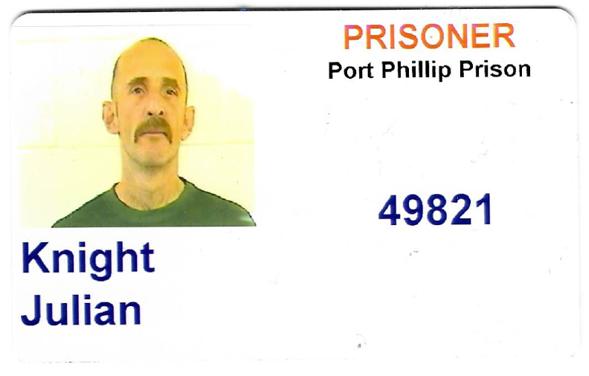
JULIAN KNIGHT
PRISONER 49821
[Port Phillip Prison]
A downloadable copy (and therefore printable):
Loading...
The Result of Mr Knight’s 2015 mercy plea:
Well, apparently Julian Knight’s mercy plea (5th January 2015) went no-where, aka ‘all fell of deaf ears’ with then Victorian ‘guvnuh‘ Chernov, a political appointment. We consider it an inappropriate political move by Chernov to serve his self interest – he was due to resign as Government of Victoria 30th June 2015, which he did.
NOTE: The Governor of Victoria is appointed by King Charles III (as the monarch of Australia) (HRH Queen Elizabeth II, back in 2015) on the formal advice of the Premier of Victoria, making the Premier’s recommendation the deciding factor in who holds the office. The Governor acts as the King’s representative in the state, exercising Head of State powers on the Premier’s advice, with terms typically lasting around five years but serving “at the King’s pleasure”. [SOURCE: Google AI – which is anonymous and so unreliable).
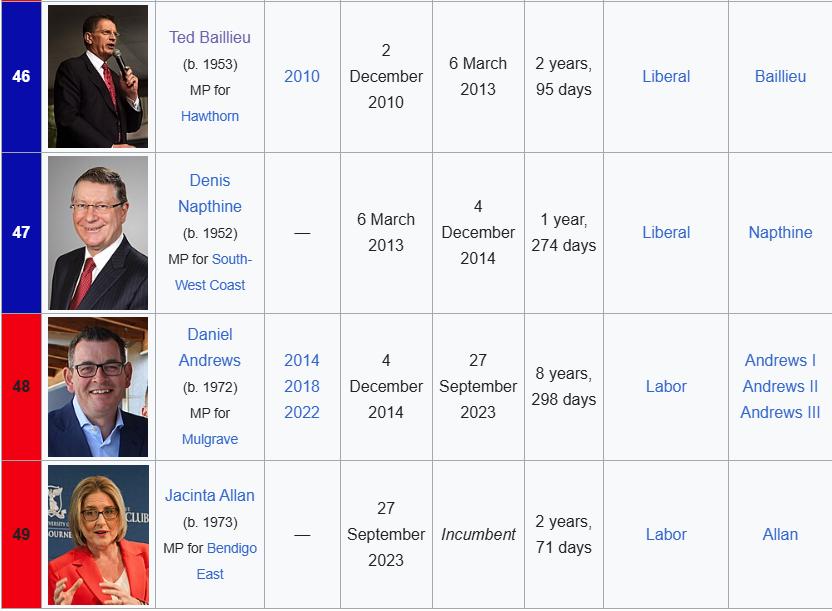
That is probably because Chernov was a mere disciple of the Victorian Government moreso that any independent representative of The Queen. In January 2015 when Julian submitted his petition of Mercy to the Governor of Victoria, the then Premier of Victoria was guess who? Labor’s Daniel Andrews MP from 4 December 2014 to 23 September 2023.
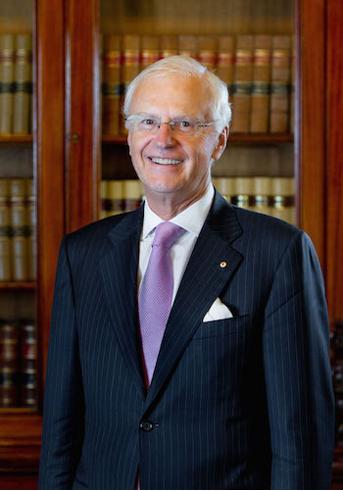
We note for the record that Wikipedia spin on Alex Chernov states that he had attended and graduated from Melbourne High School, presumably in the the late 1950s.
Now recall that Julian Knight did so as well in December 1985, similarly obtaining his Higher School Certificate at Melbourne High School. Julian had “trained with the Melbourne High School (Army) Cadet Unit (Apr 84 – Dec 85).
So it is rather bizarre that Chernov as a student from the same alma mater distanced himself from Julian Knight. But that’s politics for you. Chernov quit as Governor of Victoria on 30th June 2015.
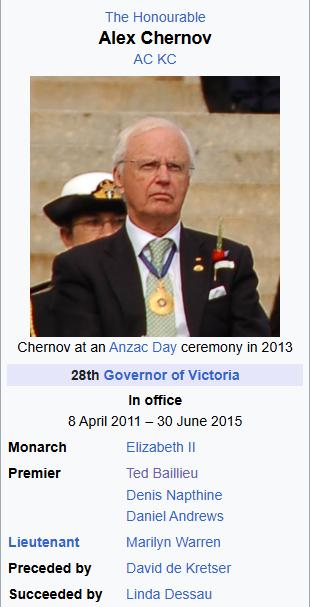
We consider it rather hypocritical that Alex Chernov according to Wikipedia (read link below) had been admitted to practise and signed the Roll of Counsel as a barrister in 1968, practising mostly in commercial law and equity. Now ‘Equity‘ (in Law) has a specific meaning and is a specialisation of Law practice.
When one reads more about Equity Law, it becomes clear that Chernov completely wasted his career time in this field, given that as Governor of Victoria, the dismissive way he treated Julian Knight’s appeal.
Equity (in Law) (Wikipedia):
In the field of jurisprudence, equity is the particular body of law, developed in the English Court of Chancery,[1] with the general purpose of providing legal remedies for cases wherein the common law is inflexible and cannot fairly resolve the disputed legal matter.[2] Conceptually, equity was part of the historical origins of the system of common law of England,[2] yet is a field of law separate from common law, because equity has its own unique rules and principles, and was administered by courts of equity.[2]
Equity exists in domestic law, both in civil law and in common law systems, as well as in international law.[1] The tradition of equity begins in antiquity with the writings of Aristotle (epieikeia) and with Roman law (aequitas).[1][3] Later, in civil law systems, equity was integrated in the legal rules, while in common law systems it became an independent body of law.[1]
Equity in common law jurisdictions (general)
In jurisdictions following the English common law system, equity is the body of law which was developed in the English Court of Chancery and which is now administered concurrently with the common law.[4]
For much of its history, the English common law was principally developed and administered in the central royal courts: the Court of King’s Bench, the Court of Common Pleas, and the Exchequer. Equity was the name given to the law which was administered in the Court of Chancery. The Judicature Acts of the 1870s effected a procedural fusion of the two bodies of law, ending their institutional separation. The reforms did not fuse the actual bodies of law however. As an example, this lack of fusion meant it was still not possible to receive an equitable remedy for a purely common law wrong. Judicial or academic reasoning which assumes the contrary has been described as a “fusion fallacy”.[5]
Jurisdictions which have inherited the common law system differ in their treatment of equity. Over the course of the twentieth century some common law systems began to place less emphasis on the historical or institutional origin of substantive legal rules. In England and Wales, Australia, New Zealand, and Canada, equity remains a distinct body of law. Modern equity includes, among other things:[5][6]
- the law relating to express, resulting, and constructive trusts;
- fiduciary law;
- equitable estoppel (including promissory and proprietary estoppel);
- relief against penalties and relief against forfeiture;[7]
- the doctrines of contribution, subrogation and marshalling; and
- equitable set-off.
Black’s Law Dictionary, 10th ed., definition 4, differentiates “common law” (or just “law”) from “equity”.[8][9] Before 1873, England had two complementary court systems: courts of “law” which could only award money damages and recognized only the legal owner of property, and courts of “equity” (courts of chancery) that could issue injunctive relief (that is, a court order to a party to do something, give something to someone, or stop doing something) and recognized trusts of property. This split propagated to many of the colonies, including the United States. The states of Delaware, Mississippi, South Carolina, and Tennessee continue to have divided Courts of Law and Courts of Chancery. In New Jersey, the appellate courts are unified, but the trial courts are organized into a Chancery Division and a Law Division. There is a difference of opinion in Commonwealth countries as to whether equity and common law have been fused or are merely administered by the same court, with the orthodox view that they have not (expressed as rejecting the “fusion fallacy”) prevailing in Australia,[10] while support for fusion has been expressed by the New Zealand Court of Appeal.[11]
For most purposes, the U.S. federal system and most states have merged the two courts.[12]
The latter part of the twentieth century saw increased debate over the utility of treating equity as a separate body of law. These debates were labelled the “fusion wars”.[13][14] A particular flashpoint in this debate centred on the concept of unjust enrichment and whether areas of law traditionally regarded as equitable could be rationalised as part of a single body of law known as the law of unjust enrichment.[15][16][17]
History of equity in common law jurisdictions
After the Norman Conquest of England in the 11th century, royal justice came to be administered in three central courts: the Court of King’s Bench, the Court of Common Pleas, and the Exchequer. The common law developed in these royal courts, which were created by the authority of the King of England, and whose jurisdiction over disputes between the King’s subjects was based upon the King’s writ.[18] Initially, a writ was probably a vague order to do right by the plaintiff,[18] and it was usually a writ of grace, issued at the pleasure of the King.[19]
During the 12th and 13th centuries, writ procedure gradually evolved into something much more rigid. All writs to commence actions had to be purchased by litigants from the Chancery, the head of which was the Lord Chancellor.[18] After writs began to become more specific and creative (in terms of the relief sought), Parliament responded in 1258 by providing in the Provisions of Oxford that the Chancellor could no longer create new writs without permission from the King and the King’s Council (the curia regis).[18] Pursuant to this authorization,[18] litigants could purchase certain enumerated writs de cursu (as a matter of course) which later became known as writs ex debito justitiae (as a matter of right).[19] Each of these writs was associated with particular circumstances and led to a particular kind of judgment.[18] Procedure in the common law courts became tightly focused on the form of action (the particular procedure authorized by a particular writ to enforce a particular substantive right), rather than what modern lawyers would now call the cause of action (the underlying substantive right to be enforced).
Because the writ system was limited to enumerated writs for enumerated rights and wrongs, it sometimes produced unjust results. Thus, even though the King’s Bench might have jurisdiction over a case and might have the power to issue the perfect writ, the plaintiff might still not have a case if there was not a single form of action combining them. Lacking a legal remedy, the plaintiff’s only option would be to petition the King.
Litigants began to seek relief against unfair judgments of the common law courts by petitioning the King. Such petitions were initially processed by the King’s Council, which itself was quite overworked, and the Council began to delegate the hearing of such petitions to the Lord Chancellor.[20] This delegation is often justified by the fact that the Lord Chancellor was literally the Keeper of the King’s Conscience,[21][22] although Francis Palgrave argued that the delegation was initially driven by practical concerns and the moral justification came later.[20] The moral justification went as follows: as Keeper of the King’s Conscience, the Chancellor “would act in particular cases to admit ‘merciful exceptions’ to the King’s general laws to ensure that the King’s conscience was right before God”.[22] This concern for the King’s conscience was then extended to the conscience of the defendant in Chancery, in that the Chancellor would intervene to prevent “unconscionable” conduct on the part of the defendant, in order to protect the conscience of the King.[22]
By the 14th century, it appears that Chancery was operating as a court, affording remedies for which the strict procedures of the common law worked injustice or provided no remedy to a deserving plaintiff. Chancellors often had theological and clerical training and were well versed in Roman law and canon law.[21][23] During this era, the Roman concept of aequitas influenced the development of the distinctly different but related English concept of equity: “The equity administered by the early English chancellors … [was] confessedly borrowed from the aequitas and the judicial powers of the Roman magistrates.”[21] By the 15th century, the judicial power of Chancery was clearly recognised.
Early Chancery pleadings vaguely invoked some sort of higher justice, such as with the formula “for the love of God and in way of charity“.[24] During the 15th century, Chancery pleadings began to expressly invoke “conscience”, to the point that English lawyers in the late 15th century thought of Chancery as a court of “conscience”, not a court of “equity”.[24] However, the “reasoning of the medieval chancellors has not been preserved” as to what they actually meant by the word “conscience”,[25] and modern scholars can only indirectly guess at what the word probably meant.[26] The publication of the treatise The Doctor and Student in the early 16th century marked the beginning of Chancery’s transformation from a court of conscience to a court of equity.[27]
Before that point in time, the word “equity” was used in the common law to refer to a principle of statutory interpretation derived from aequitas: the idea that written laws ought to be interpreted “according to the intention rather than the letter” of the law.[28] What was new was the application of the word “equity” to “the extraordinary form of justice administered by the chancellor”, as a convenient way to distinguish Chancery jurisprudence from the common law.[28]
A common criticism of Chancery practice as it developed in the early medieval period was that it lacked fixed rules, varied greatly from Chancellor to Chancellor, and the Chancellor was exercising an unbounded discretion. The counterargument was that equity mitigated the rigour of the common law by looking to substance rather than to form.[29]
The early chancellors were influenced by their training in theology and canon law, but the law of equity they applied was not canon law, but a new kind of law purportedly driven by conscience.[30] Whatever it meant in the medieval era, the word “conscience” clearly carried a subjective connotation (as it still does today).[30] Complaints about equity as an arbitrary exercise of conscience by nonlawyer Chancellors became quite frequent under the chancellorship of Thomas Wolsey (1515–1529), who “had no legal training, and delighted in putting down lawyers”.[30]
In 1546, Chancellor Thomas Wriothesley, a nonlawyer, was accused of trying to inject the civil law into Chancery.[31] This was a “wild exaggeration”, but as a result, the Crown began to transition away from clergy and nonlawyers and instead appointed only lawyers trained in the common law tradition to the position of Lord Chancellor (although there were six more nonlawyer chancellors in the decades after Wriothesley).[31] The last person without training in the common law before 2016 to serve as Lord Chancellor was Anthony Ashley Cooper, 1st Earl of Shaftesbury, who served briefly from 1672 to 1673.[31] (Liz Truss was appointed as Lord Chancellor in 2016, but this was after the position had been stripped of its judicial powers by the Constitutional Reform Act 2005, leaving the Chancellor of the High Court as the highest judge sitting in equity in England and Wales.)
The development of a court of equity as a remedy for the rigid procedure of the common law courts meant it was inevitable that the two systems would come into conflict. Litigants would go “jurisdiction shopping” and often would seek an equitable injunction prohibiting the enforcement of a common law court order. The penalty for disobeying an equitable injunction and enforcing an unconscionable common law judgment was imprisonment.[22]
The 1615 conflict between common law and equity came about because of a “clash of strong personalities” between Lord Chancellor Ellesmere and the Chief Justice of the King’s Bench, Sir Edward Coke.[31] Chief Justice Coke began the practice of issuing writs of habeas corpus that required the release of people imprisoned for contempt of chancery orders. This tension reached a climax in the Earl of Oxford’s case (1615) where a judgment of Chief Justice Coke was allegedly obtained by fraud.[32] Chancellor Ellesmere issued an injunction from the Chancery prohibiting the enforcement of the common law order. The two courts became locked in a stalemate, and the matter was eventually referred to the Attorney General, Sir Francis Bacon. Sir Francis, by authority of King James I, upheld the use of the equitable injunction and concluded that in the event of any conflict between the common law and equity, equity would prevail.[33]
Chancery continued to be the subject of extensive criticism, the most famous of which was 17th-century jurist John Selden‘s aphorism:
Equity is a roguish thing: for law we have a measure, know what to trust to; equity is according to the conscience of him that is Chancellor, and as that is larger or narrower, so is equity. ‘Tis all one as if they should make the standard for the measure we call a foot, a Chancellor’s foot; what an uncertain measure would this be? One Chancellor has a long foot, another a short foot, a third an indifferent foot: ’tis the same thing in a Chancellor’s conscience.[34]
After 1660, Chancery cases were regularly reported, several equitable doctrines developed, and equity started to evolve into a system of precedents like its common law cousin.[35] Over time, equity jurisprudence would gradually become a “body of equitable law, as complex, doctrinal, and rule-haunted as the common law ever was”.[36]
One indicator of equity’s evolution into a coherent body of law was Lord Eldon‘s response to Selden in an 1818 chancery case: “I cannot agree that the doctrines of this court are to be changed with every succeeding judge. Nothing would inflict on me greater pain, in quitting this place, than the recollection that I had done anything to justify the reproach that the equity of this court varies like the Chancellor’s foot.”[35][37]
Equity’s primacy over common law in England was later enshrined in the Judicature Acts of the 1870s, which also served to fuse the courts of equity and the common law (although emphatically not the systems themselves) into one unified court system.
Statute of Uses 1535
One area in which the Court of Chancery assumed a vital role was the enforcement of uses, a role that the rigid framework of land law could not accommodate. This role gave rise to the basic distinction between legal and equitable interests.
In order to avoid paying land taxes and other feudal dues, lawyers developed a primitive form of trust called the “use” that enabled one person (who was not required to pay tax) to hold the legal title of the land for the use of another person. The effect of this trust was that the first person owned the land under the common law, but the second person had a right to use the land under the law of equity.
Henry VIII enacted the Statute of Uses in 1535 (which became effective in 1536) in an attempt to outlaw this practice and recover lost revenue. The Act effectively made the beneficial owner of the land the legal owner and therefore liable for feudal dues.
The response of the lawyers to this Statute was to create the “use upon a use”. The Statute recognized only the first use, and so land owners were again able to separate the legal and beneficial interests in their land.
In Australia:
Equity remains a cornerstone of Australian private law. A string of cases in the 1980s saw the High Court of Australia re-affirm the continuing vitality of traditional equitable doctrines.[38] In 2009 the High Court affirmed the importance of equity and dismissed the suggestion that unjust enrichment has explanatory power in relation to traditional equitable doctrines such as subrogation.[39]
The state of New South Wales is particularly well known for the strength of its Equity jurisprudence. However, it was only in 1972 with the introduction of reform to the Supreme Court Act 1970 (NSW) that empowered both the Equity and Common Law Division of the Supreme Court of NSW to grant relief in either equity or common law.[40] In 1972 NSW also adopted one of the essential sections of the Judicature reforms, which emphasised that where there was a conflict between the common law and equity, equity would always prevail.[41] Nevertheless, in 1975 three alumni of Sydney Law School and judges of the NSW Supreme Court, Roddy Meagher, William Gummow and John Lehane produced Equity: Doctrines & Remedies. It remains one of the most highly regarded practitioner texts in Australia and England.[42][43] The work is now in its 5th edition and edited by Dyson Heydon, former Justice of the High Court, Justice Mark Leeming of the New South Wales Court of Appeal, and Dr Peter Turner of Cambridge University.[5]
References and Further Reading:
[1] ‘Governors of Victoria‘, Government House Victoria, https://www.governor.vic.gov.au/governors-victoria
[2] ‘Alex Chernov‘, Wikipedia, https://en.wikipedia.org/wiki/Alex_Chernov