
The record of abuse in the Australia Defence Force (ADF) dates back to before 1976, which was when Australia’s respective tri-services (Army, Navy and Air Force) were officially unified.
Indeed, the record of abuse is historically chronic and dates back to the formation of the Royal Military College for training Army officers at Duntroon from the first intake of 1911. Moreso, the abuse culture was inculcated upon the second intake of new cadets in 1912, whereby the then older boy ‘senior’ cadets of the 1911 intake took it upon themselves to bully the new recruits, and so perpetuated the inter-year cadet culture of ‘hazing‘ of juniors by seniors which became known as ‘bastardisation‘. It might have had something to do with the commandant leadership – ‘negative leadership’, not ‘positive leadership’. [Read More about Negative Leadership]
Duntroon brass (officers) have since RMC’s second intake way back in 1912 have continued to turn a ‘blind eye’ to such hate-filled shenanigans by senior cadets whom can only be termed school bullies being allowed to criminally run amok against freshmen. Such occurred institutionally upon RMC intake after RMC intake.
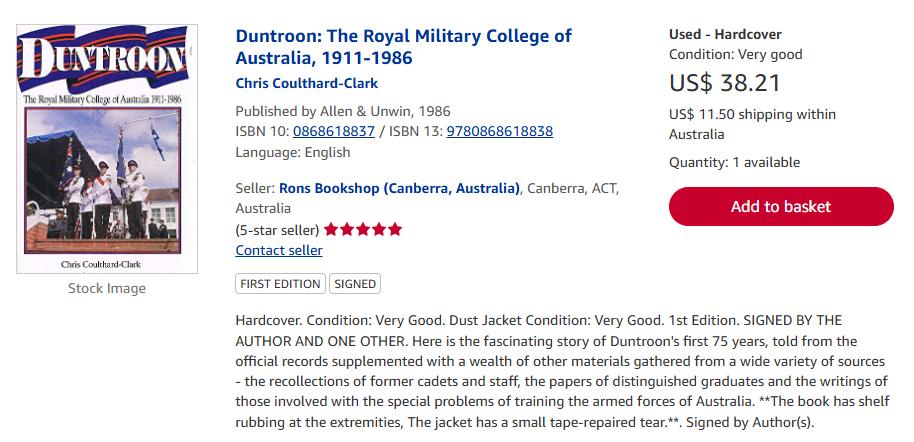
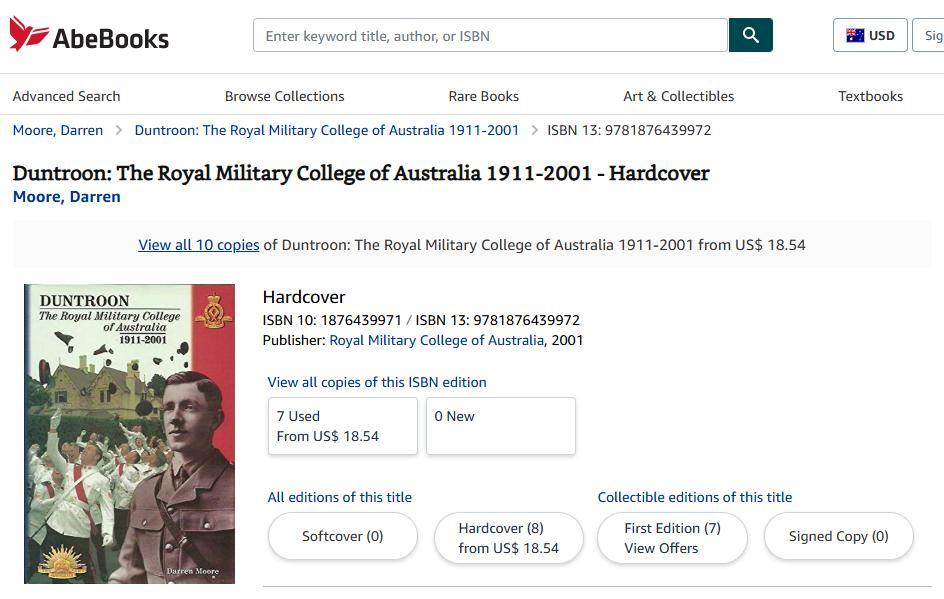
This is briefly documented in various few pages in Chris Clark‘s 1986 historical documentary non-fiction book of Duntroon as well as in a dedicated Chapter 20 in Darren Moore‘s 2001 historical documentary nonfiction book also on Duntroon. Respectively both authors were RMC graduates; then Chris Coulthard-Clark (CSC No 2662)* in 1972, and Darren Moore (CSC No 6368) in 1991. Links to how each book may be purchased are provided below under the heading ‘Further Reading and References’. Please note that we do not link to any purchasing from The Duntroon Society, on principle.
[* NOTE: “CSC No.” refers to RMC Duntroon’s Corps of Staff Cadets recruit unique identifying number at the time of entry into RMC. The numbering is in sequential order, whether eventually graduated or not. It is a documented record of Australian military enlistment to be accepted to train to be an Army officer, subject to successfully completing training and then graduation as a Second Lieutenant ready to serve in Active Service full-time in a leadership career in the Australian Regular Army.]
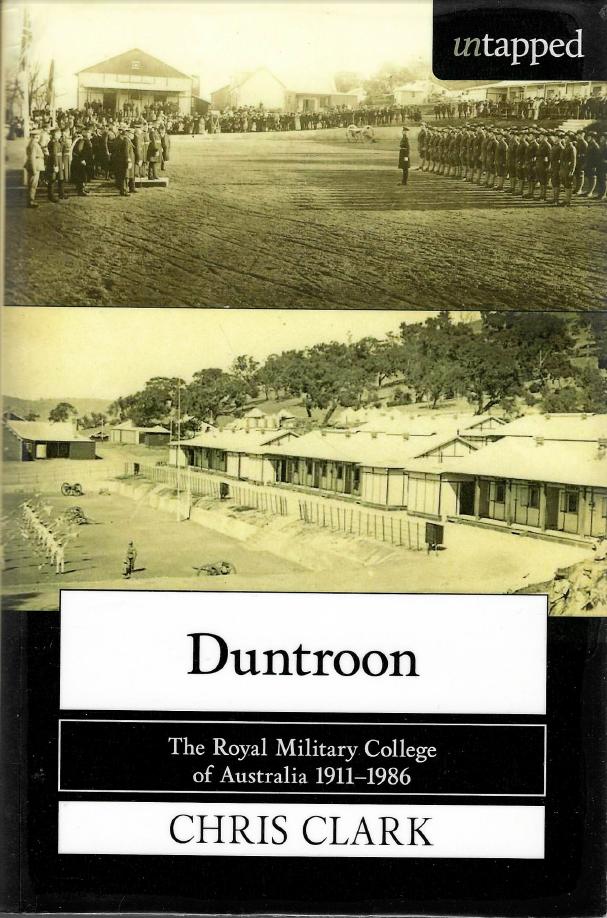
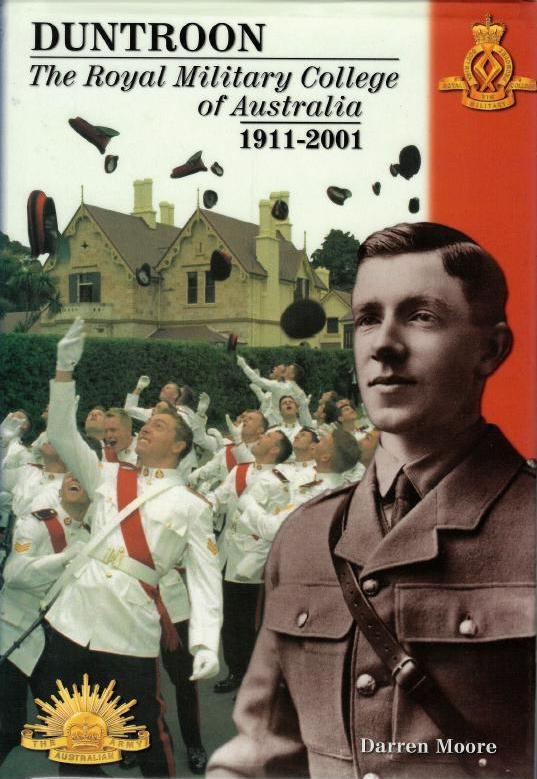
Both above books are recommended reading for those interested in Australia’s Royal Military College Duntroon and its history. These two books also serve as useful background reading for those interested in the record of institutional abuse in the ADF, specially in the Australian Army’s officer training at this institution.
In this article, we reproduce selected extracts from both books that briefly and anecdotally cover Duntroon’s historical institutional abuse culture – which remains unchecked by Army brass (officer command) and so remains disturbingly ongoing.
To what end? Another Hoddle Street when in some junior recruit their negative leadership picks on the wrong strength of character? If nothing changes, Duntroon possibly could risk becoming the next Fort Hood mass shooting by a disgruntled misaligned soldier recruit – not for ideological excuses, but more likely as violent vengeance by being yet another incoming freshman abused. We make no threats here.
We reproduce these extracts respecting the copyright of the author. We do this on an unusual basis of reporting and review in respect of the topic of RMC Duntroon and its particular connection to the subsequent bastardisation treatment of former RMC Staff Cadet Julian Knight in 1987 and the Hoddle Street consequences. We consider this use of parts of the books for this critical purpose to constitute ‘fair dealing’ and so there being no infringement of the copyright material.
Chris Clark’s book extract at page 3:
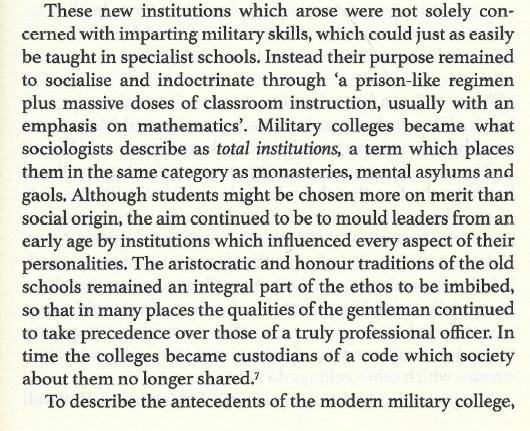
‘The Knighthood’ Review:
Well, the glaring key term in this paragraph is “indoctrinate“. Is RMC culture by the encouraged delegated in-barracks negative leadership by senior cadet bullies not ‘Lord of the Flies’ [Read More] and outside contemporary Australian society’s scrutiny?
What is a “total institution” indeed if not a “monastery”, “mental asylum “or “gaol”?
How can a code of moulding personalities of demonstrated natural leaders (apparently worthy applicants to RMC) shape leaders of independent leadership military command in a civilised contemporary society that is Australia?
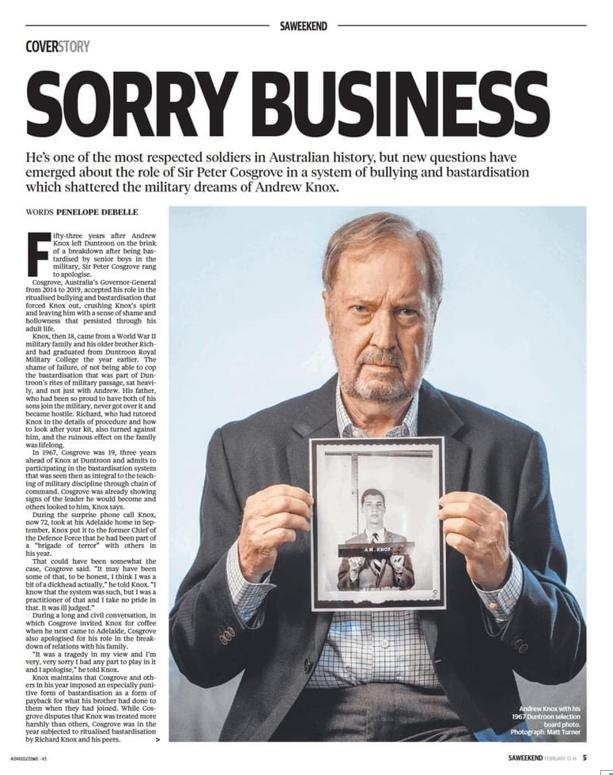
The RMC sales pitch to would be recruits is this:

But RMC Duntroon’s reality is far darker…
Chris Clark’s book extract at page 66:
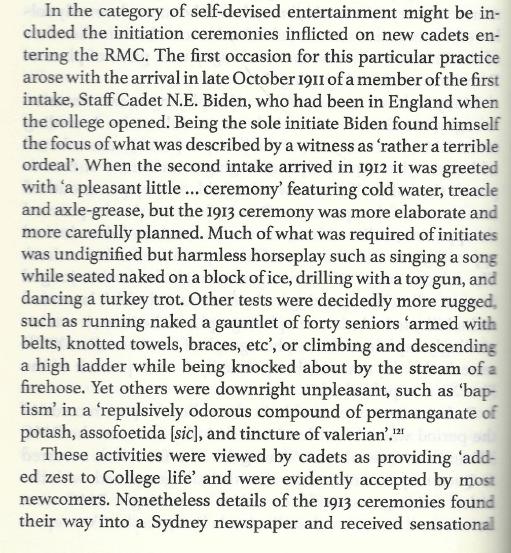
‘The Knighthood’ Review:
RMC senior cadets “self-devised entertainment” by the degenerate exploitation of freshmen in the own ranks? RMC college life indeed is ” rather terrible ordeal”. Army Recruitment propaganda might well call it “zest”. Many RMC hopeful recruits leave and return to civil society. Duntroon was never part of civilian society, except as a remote former 19th Century sheep station (1825-1910), come a 2-legged sheep station (RMC).

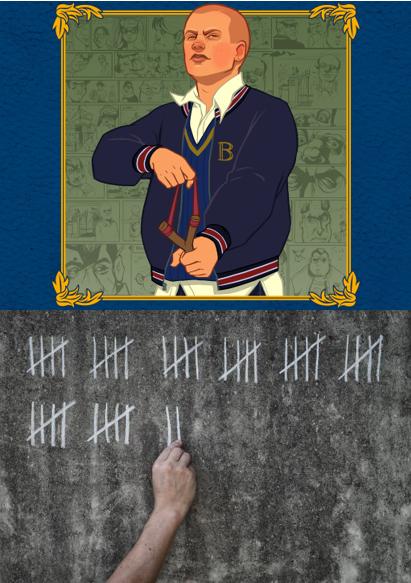
The media and Australian civil society sees otherwise. RMC Duntroon is an asylum training bullies.
Chris Clark’s book extract at page 67:
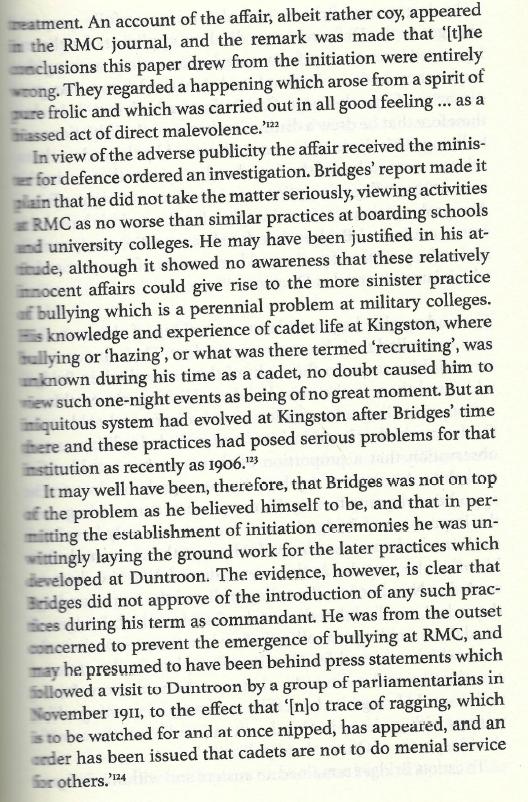
‘The Knighthood’ Review:
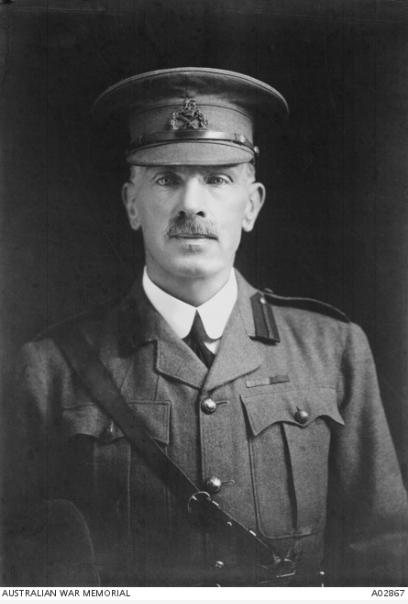
Bridges was clearly not “on top of the problem” nor even much around nor visible to the cadets of the day.
So, regrettably he set the “frolic” and “ragging” sub-standard malevolence (not towards any enemy but to fellow compatriots in the same company and platoon). His legacy failure in leadership has since been condoned by Clark and successive RMC commandants – this internal hate perpetuation decades on during 1987 under Commandant ‘bludger’ Murray Blake (1987-1990) during Julian Knight’s internment and incessant bastardisation there by senior cadets, yet again.
“An order has been issued that cadets are not to do menial service for others” ?? [RMC Commandant #1 Bridges, in Clark, p. 67]
Well a century on, an extract of RMC Staff Cadet Julian Knight’s ‘Personal Account’ of RMC Duntroon to the lily-livered Defence Abuse Response Taskforce in 2013 reads as follows:
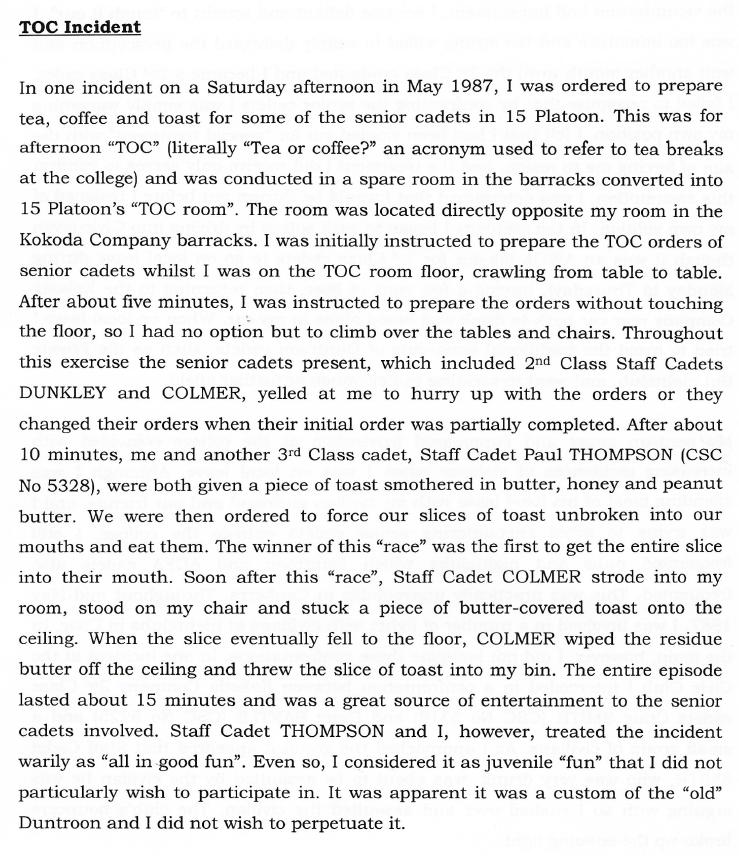
Menial service or what decades later in 1987? Nothing’s changed at the Duntroon asylum since the 1912 creation of the second intake of junior ‘first-year’ cadets ruled over by the senior cadets of the 1911 first intake.
Duntroon established a copycat of the British Dickensian social class system for the new Australian military:
-
- Officer elites v enlisted men
- Officer cadets within Duntroon ranked by intake year – senior cadets v junior cadets (‘freshmen’)
- ADFA: Army v Navy v Air Force,
- Males v females
- Control freaks v Complainants?
…all outside Army brass earshot, selective blinded eyes. RMC has a ‘Selection Board’ for budding recruit applicants.. and they stay on to enforce like RMC Commandant Murray (bludger) Blake (1987-1990) during Julian Knight’s internment. Another take is the old adage: ‘Those who can’do, teach‘.
All so unnecessarily, perversely, and so corrosively inculcating a distrustful antagonistic training culture to hatefully abuse your fellow young Aussie volunteer sign-up to serve his/her country. How unAustralian?! How anathema to Australian civil society and yet let to get away with an antiquated regime delegating depraved senior cadet bullies to perpetuate a negative leadership culture of fear and loathing against their own freshmen?
Chris Clark’s book extract at page 68:
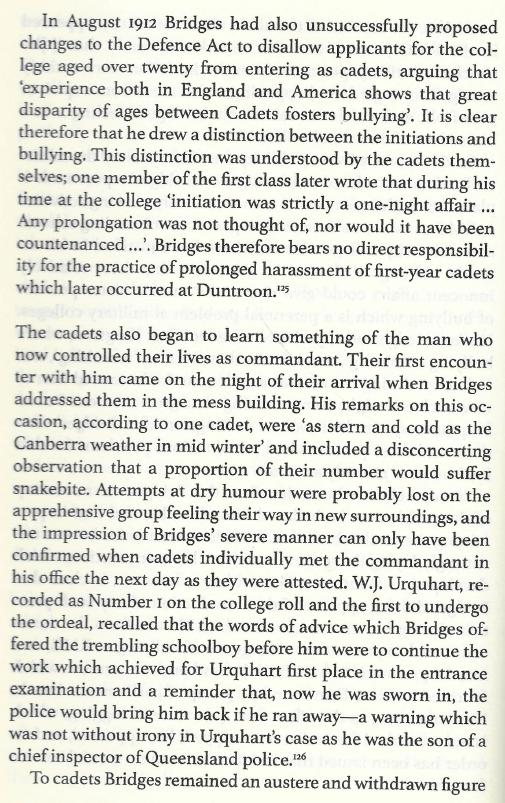
‘The Knighthood’ Review:
So way back in August 1912, just a year after RMC Duntroon opened for the Army’s new officer training (pre-The Great War forthcoming 1914-1918), then RMC Commandant #1 LTCOL William Bridges [1861-1915] so early on recognised that from overseas experience that allowing a “great disparity of ages between Cadets (presumable training together at the same institution at time) fostered bullying“.
Yet his proposed changes were unsuccessful with the then military establishment and politics in power to accordingly change Australia’s then Defence Act. Note that Australia had only existed as an independent nation since 1901, just a decade prior, before that this ‘great southern land‘ had been a British-run colony (1770-1901).
Clark here references Bridge’s “experience both in England and America“. This presumably refers to England’s Royal Military Academy in Woolwich (founded in 1741) and Royal Military Academy at Sandhurst (founded in 1801) as well as to America’s U.S. Military Academy at West Point (New York, founded in 1802). All are Army officer training establishments – with strict traditions, albeit ‘Victorian’!
Further, it is noteworthy of Bridges background before RMC Duntroon.
“Bridges was born on 18 February 1861 in Greenock, Scotland, the son of William Wilson Somerset Bridges, a Royal Navy captain, and his Australian wife, Mary Hill Throsby. He was educated at Ryde on the Isle of Wight, before attending the Royal Naval School at New Cross, London, in 1871. He remained there until mid-1872 when his family moved to Canada, after his father was badly injured in an accident and forced to retire from the navy. For the next three years, Bridges was a boarder at the Trinity College School, at Port Hope, Ontario. On 10 April 1877, at the age of 16, he entered the newly established Royal Military College of Canada in Kingston as part of the college’s second intake, and was assigned the student number 25. Although he was a good student, he became unsettled and began failing his courses when his family migrated to Australia leaving him in Kingston. In June 1879, having received his Certificate of Military Qualifications, Bridges was permitted to leave the college, becoming its first drop out after his father paid a $100 fine to withdraw him.” [SOURCE]
Clark writes in his biography more about Bridges:
“Bridges insisted that his proper function was to act as official representative, but his efforts to have his view accepted were cut short in January 1910 when he was recalled to found Australia’s military college. At first he attempted to decline the post of college commandant but, on Defence Minister (Sir) Joseph Cook’s insistence, accepted and arrived back in Australia in May, having visited military schools in England, America and Canada.”
So, was Bridges suitably fit and proper to be first commandant of a new Australian nation’s experimental Army officer training establishment initially leasing a converted sheep farm in 1910 situated out in woop woop?
No, Bridges was more of an academic recluse than an Army leader. Upon the onset of The Great War in 1914, Bridges was despatched to the British Gallipoli invasion campaign commanding the 1st Australian Division at Gallipoli from April that year, where he died of sniper related gangrene on 18 May 1915. [Read More]
At Duntroon, Clark remarks of somehow there being a “distinction between the initiations and bullying“. That is absurd; the two amount to the same thing – being bullying behaviour by the senior cadets over the junior (first year) cadets. This is even though in many cases the ages between the two intake years were/are likely on par. Clark then irrationally concludes that “Bridges therefore bears no responsibility for the practice of prolonged harassment of first year cadets which later occurred at Duntroon.“
What mealy-mouthed crap from Clark here! Was Clark pardoning Bridges in order to get his book endorsed by Duntroon brass and RMC History Committee’s co-operation no less? Clark in his ‘Acknowledgements’ chapter in his book praises all the research support he received from Duntroon brass, so clearly he was not keen to upset the brass. The following extract is revealing to this effect.
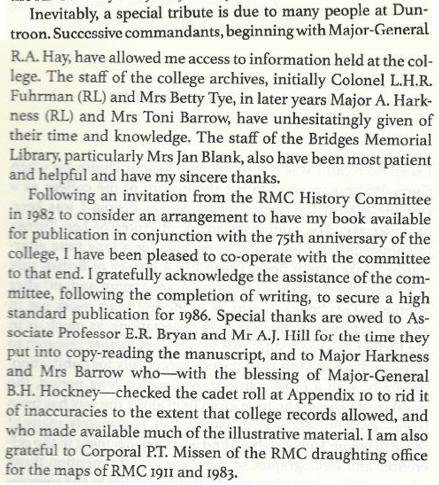
Noteworthy, Clark has also written a detailed biography on Bridges, published here: https://adb.anu.edu.au/biography/bridges-sir-william-throsby-5355
However, it would seem clear that RMC Duntroon Commandant #1 William Bridges facilitated the bullying culture at Duntroon from the 1912 advancement of the initial 1911 first year cadets to second year cadets. The following extracts from Clark’s pages 68 – 69 are revealing and contradictory to the above baseless assessment by Clark.
“To cadets Bridges remained being “an austere and withdrawn figure…
Quote:
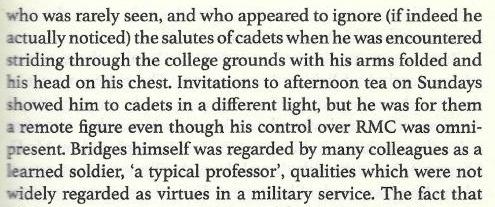
Well, was RMC Commandant #1 Bridges, being considered by cadets as “an austere and withdrawn figure” and “a typical professor” of a personality suitable as a positive leadership role model for secondary school graduates budding to become Army leaders? Clearly not – “qualities which were not widely regarded a virtues in a military service“.
On new cadets’ Day 1 interview, Bridges intimidated each one-on-one with rather a negative leadership style – “severe manner” and threat of police arrest if a cadet ran away (went AWOL).
Under Commandant Bridges as Duntroon’s first commandant, RMC was an experimental carbon copy model of British Army Officer College at Sandhurst, if not a Victorian boarding school (think BBC TV Ripping Yarns drama series ‘Tomkinsons School Days’. RMC was civilly remote way out ‘bush’ occupying a converted former Duntroon sheep farm long before Canberra existed? To the new recruits, RMC Commandant Bridges must have been no reliable ‘bridge’ from school boy civvy life to military life, let alone have the back of buddy Army leaders; rather moreso an unforgiving coastal swift-water ‘spit crossing’ in maritime terms. [For the uninformed Read More].
Compare Bridges command in late 1986 in Julian Knight’s time when he applied successfully for entry into RMC for Army officer training from his part-time Reservist Role as a NCO Lance Corporal in the Australian Army’s Infantry Corps, the age requirements for RMC were strictly between 18 to 23; no younger, no older. Julian was 18 and the RMC Selection Board deemed he was accepted into RMC’s January 1987 intake. Julian Knight as a junior Staff Cadet at RMC in 1987 copped similar bullying – bastardisation culture by senior cadets to junior cadets perpetuates. It had been cemented bully-boy culture as ‘turn a blind eye’ acknowledged by RMC brass since in the second intake of 1912.
The ADF is slow to learn from 1911, like think a century and still counting the years. In 2025, the age range eligibility for RMC Duntroon is not stated publicly. Like try the online search for ‘RMC Duntroon‘ on Google and you get this link https://www.adfcareers.gov.au/. Then from that link try to find RMC Duntroon and then try to find the eligibility criteria, let alone try to find the age range eligibility requirements. Perhaps the ADF doesn’t need anyone? So, can a toddler or geriatric apply?
Chris Clark’s book extract at page 69:
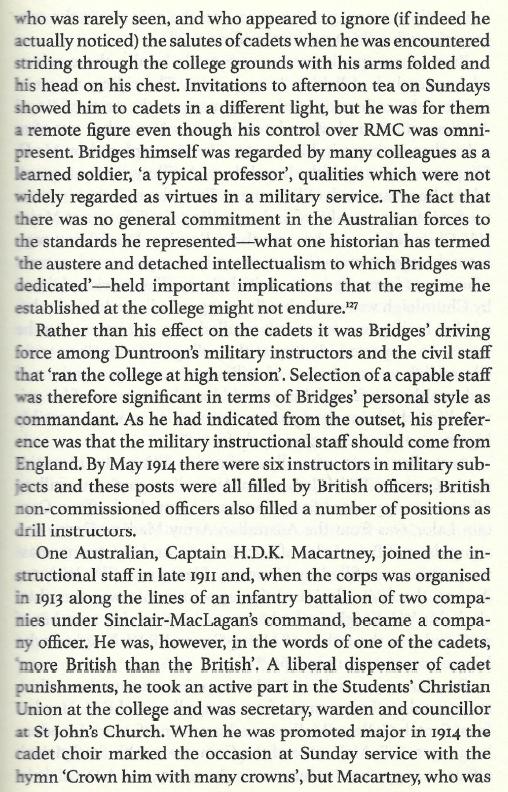
‘The Knighthood’ Review:
This extract continues from Clark’s page 68. It read that Bridges was clearly incompetent and an inappropriate choice to be selected to lead the training of junior Army officers for known forthcoming combat in The Great War (WW1) from 1914, just a few years then hence.
This Commandant “striding through the college grounds with his arms folded and his head on his chest” ? How can such mannerism underpin inspired leadership in young budding Army leaders? Clearly Bridges was more academic than pragmatic, and not a man of the troops in combat. “Detached intellectualism” indeed.
And Bridges was Scottish-born British, so no wonder he selected fellow Scots in LTCOL Sinclair-MacLagan and CAPT H.D.K. Macartney.
“When Bridges was recruiting staff for the (Royal) Military College, Duntroon, in 1910 he obtained MacLagan as director of drill in the rank of lieutenant-colonel.” [Read More]
So, more negative leadership was subsequently dished out to RMC cadets – MacLagan was a “a liberal dispenser of cadet punishments.“
Again, to what end?
Chris Clark’s book extract at page 98:
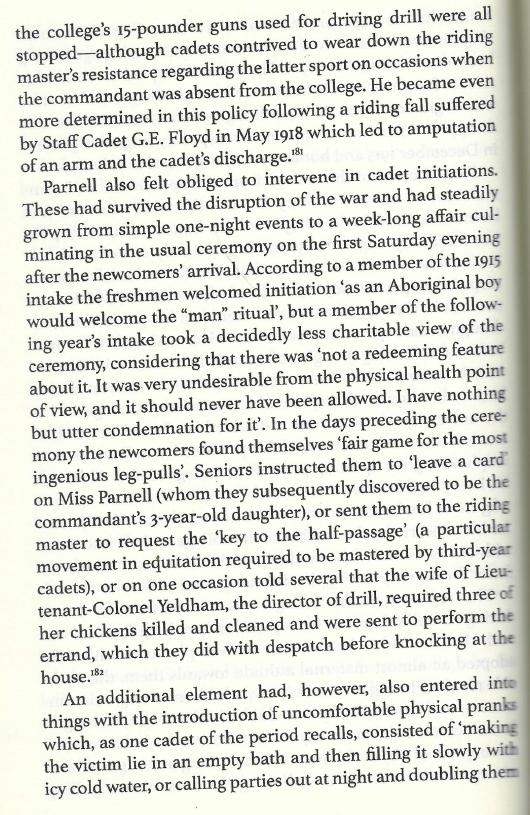
Knighthood Review:
So the one day initiation bullying by senior cadets upon junior freshmen did perpetuate and indeed extended well beyond one day. It would eventually extend to the entire year duration of perpetual ‘hazing‘ of junior Fourth Class, effectively as if they were the real enemy, undermining morale.
The so-called RMC initiation under Commandant Bridges watch would have in Julian Knight’s case approaching a century later at RMC, escalate to the bastardisation that no longer exist at RMC (according to ADF Recruitment). Did Hoddle Street exist? In Julian Knight’s case senior cadets of mainly Kokoda Company picked on the wrong junior. The criminal perpetrators got away with it in every way; society didn’t.
Chris Clark’s book extract at page 99:
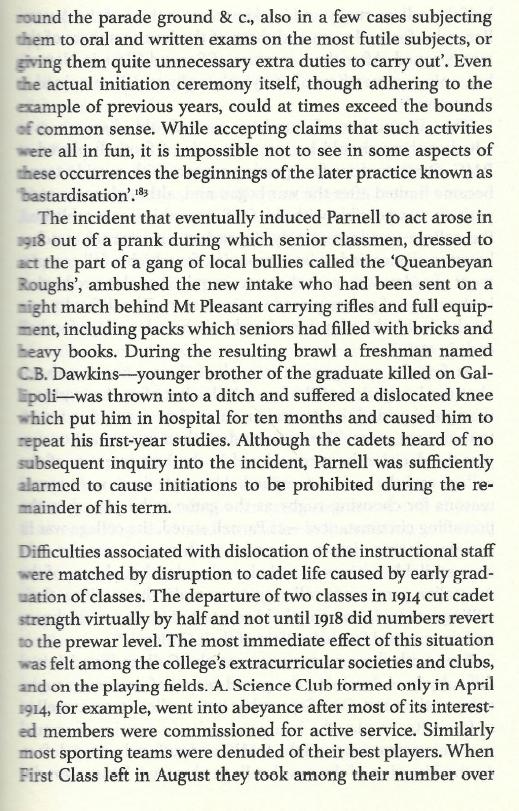
Knighthood Review:
“An order has been issued that cadets are not to do menial service for others” ??
[SOURCE: RMC Commandant #1 Bridges, in Clark, p. 67]
Yet the RMC abuse culture is allowed to persist under Bridges’ brass command. Such command cannot surely be described as ‘leadership’, but moreso ‘indoctrination’.
Senior cadets had become the enemy of junior cadets – vindictive, despised, resented, hated – essentially negative leadership. No wonder so many juniors escaped custody.
Yet many RMC senior cadets have graduated to go on to ‘lead’ enlisted soldiers in combat – very scary! So, who was the commanding officer of Ben Roberts-Smith, VC?
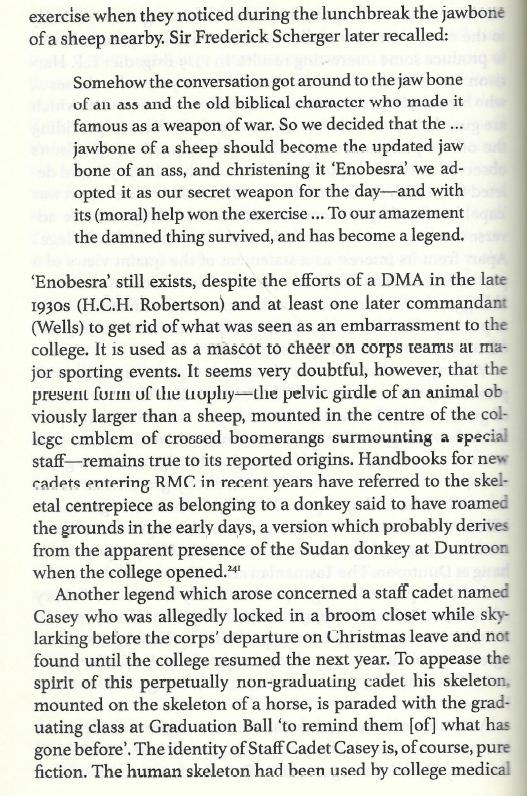
Chris Clark’s book extract at page 132:
Knighthood Review:
This page 132 extract delves into a few example RMC cadet creative pranks from the 1920s (that is between the two world wars). It was back when the RMC officer training course had reverted back to its 4-year duration, so allowing for more time on their hands to be ‘creative’..et al. Whereas during each of the two wars the training course got understandably fast-tracked.
Co-incidentally, Duntroon cadet connection with that carcass of a dead sheep’s jawbone drew fascination and creativity by RMC cadets on a field training exercise (FEX); them being the 2-legged variety of herded ‘sheep’ rotating through RMC being the former Duntroon sheep station of 1825.
Over the years, the sheep station rural property was used to house over 40,000 sheep, so no wonder one or two or so had perished and their skeletal remains lay where they fell. In comparison, more than 10,000 cadets have graduated from the Royal Military College – Duntroon since its establishment in there 1911. Add say roughly a third who have resigned mid-course, then we estimate 13,000 of the 2-legged variety of RMC sheep have rotated through the old sheep station since the college’s acquisition.
A relevant brief background abut Duntroon’s history:
Scottish emigrant Robert Campbell to the antipodes in the then British colony of New South Wales, was a merchant, philanthropist and politician. Campbell was granted 4,000 acres of land out ‘woop woop’ (now Canberra) and established a sheep station on the banks of the Molonglo River initially with 700 head of sheep (wool).
Those 700 sheep plus £3,000 were compensation for the government’s shipwrecked lease of Campbell’s ship. Expanding his landholding and building a stone cottage, Campbell named his growing estate Duntroon after his family home in Scotland. As mentioned, over the years into the 1860s, the station was to house over 40,000 head of sheep!
On Duntroon’s ‘Enobesra’ Myth
Back to RMC cadet creative pranks, allegedly during early Duntroon from its conversion from a sheep station to a training college in 1910, according to the note #241 at p.132 in Clark (1987) per extract above evidence of this myth (legend) was sourced from “Evidence of Air Marshal Sir Frederick Scherger in 1981 per the included quote extract. As with myths and legends, there are varied versions of the origins and accounts can become reinterpreted/misinterpreted over the passage of time like ‘Chinese whispers’.
Apparently a makeshift totem was created by creative cadets after one on field exercise had come across the skeletal remains of a pelvic bone girdle of a donkey that had long died on the old Duntroon sheep station. The totem, if in fact it existed and the account has some truth behind it, would likely have been a creative outcome of one of Duntroon’s notorious beer drinking binge sessions on a Saturday afternoon. ‘Enobesra‘ of course is ‘arsebone’ spelt backwards. The totem was apparently used by Duntroon cadets at sporting events as a good luck emblem of the Duntroon cadet tribe.
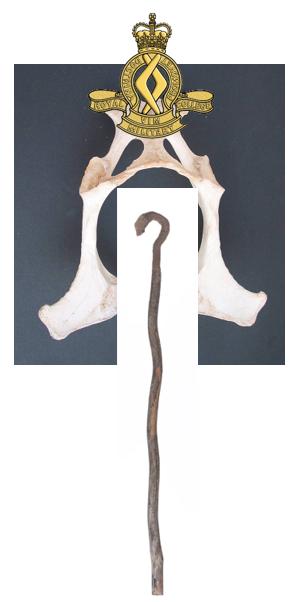
On note, ‘Enobesra’ was the original name of the journal by Duntroon cadets for Duntroon cadets: ‘Enobesra : cadets handbook‘ (issues published 1972-1978).[SOURCE: https://catalogue.nla.gov.au/catalog/2778709]
However, the account by Scherger of the discovered bone being not a donkey’s pelvic bone but a sheep’s jawbone must be contrived and false. Relevant, Clark’s pages 131-132 extract states:
“In 1924 two cadets… were on tactical exercise when they noticed during the lunchbreak the jawbone of a sheep nearby. Sir Frederick Scherger later recalled:
Somehow the conversation got around to the jawbone of an ass and the old biblical character who made it famous as a weapon of war. So we decided that the … jawbone of a sheep should become the updated jaw bone of an ass, and christening it ‘Enobesra‘ we adopted it as our secret weapon for the day – and with its (moral) help won the exercise …To our amazement the damned thing survived, and has become a legend.”
We cast doubt upon Scherger’s religious version which attempts to re-imagine the sheep jawbone as a symbolic likeness to the Biblical Old Testament story of Samson using an ass’s jawbone to strike down an army of a thousand Philistines. That “the old biblical character” refers to Samson (of Samson and Delilah fame). The image below shows the legend of Samson slaying the Philistine army of hardened warriors with the jawbone of an ass (donkey).
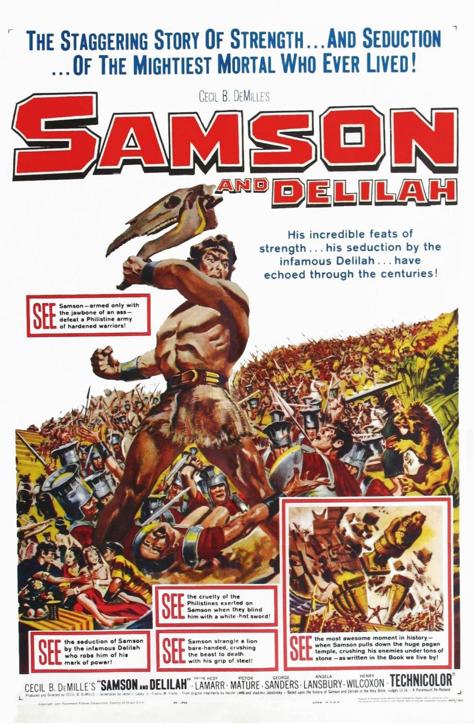
From the Bible Old Testament, Judges 15, ‘Samson’s Revenge’, which reads, quote:
Verse 14: “When Samson arrived in Lehi, the Philistines came out shouting against him. And the Spirit of the LORD came mightily upon him. The ropes on his arms became like burnt flax, and the bonds broke loose from his hands.
Verse 15: He found the fresh jawbone of a donkey, reached out his hand and took it, and struck down a thousand men.
Verse 16: Then Samson said:
“With the jawbone of a donkey
I have piled them into heaps.
With the jawbone of a donkey
I have slain a thousand men.”
Verse 17: And when Samson had finished speaking, he cast the jawbone from his hand; and he named that place Ramath-lehi.”
[Source/Read More: https://biblehub.com/bsb/judges/15.htm]
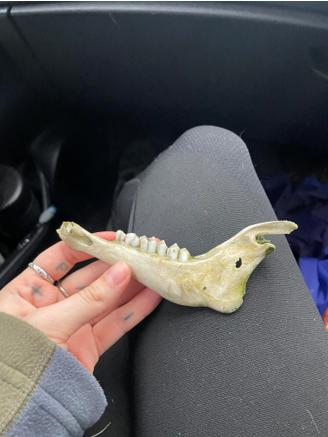
It is difficult to imagine that a sheep’s jawbone could possibly serve to be a totem of esprit de corps for Duntroon cadets.
In William Golding’s 1954 novel ‘Lord of the Flies‘, tells of a prepubescent cohort of ship-stranded boys on the isolated island who conceive a discovered Conch Shell found on a beach as a tribal emblem. Golding re-imagined the conch shell’s use by its holder to symbolize civilization, order, and democratic authority.
“At the first meeting in Chapter 2, Ralph creates rules that mimic the civilized world that the boys recently left. The conch is used not only to call meetings but also to establish order when the boys talk. Thus, the conch symbolizes civilization, adult rules, and the democratic process. As Ralph is the first to utilize the conch as a social tool, it also becomes a symbol of Ralph’s legitimacy as a leader.” [BOOK AUDIO SOURCE]
We refer on this website to a comparative Lord of the Flies experience at Duntroon by SCT Julian Knight:
The Casey ‘legend’ is pure bunkum out of another Duntroon notorious beer session.
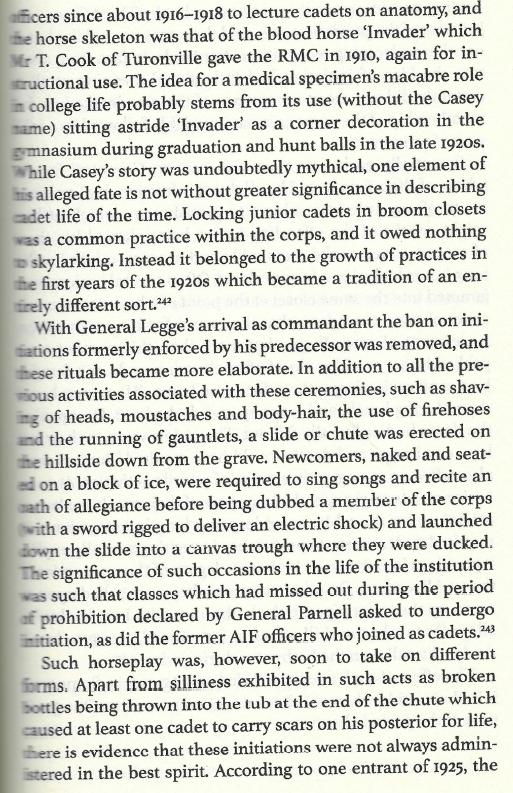
Chris Clark’s book extract at page 133:
Knighthood Review:
How can the admitted perpetual practice of senior cadets forcibly locking junior cadets (of their own training company/platoon/section be construed as anything but a demonstration of a culture of bullying, bastardisation and negative leadership? Such became part of a sick tradition endorsed by subsequent RMC commandants.
Over time, those commandants had formerly been RMC graduates, returning to repeat the sins of the past as former senior cadets of RMC. The further accounts of abuse by senior cadets toward junior cadets noted:
- Forcible locking in broom closets
- Forcible shaving body hair
- Fire hosing
- Running gauntlets
- The slide chute down Mount Pleasant into a tub with broken glass
- Stripping them naked
- Being threatened with a bayonet
- Forced sitting on a block of ice
- Inflicting electric shock using a sword
This is sadistic depraved treatment. It cannot be dismissed as mere “silliness”, “pranks” or “horseplay”. It is in any civilised decent human being’s mind not befitting of normal behaviour, let alone that of a leader of any description. It is no way in the “best spirit” of anyone seeking to become a military officer to lead in combat.
It is revealing that the authority of RMC commandants was and continues to be unaccountable to any higher authority. RMC was run like an asylum for senior cadets to behave as school-aged bullies, permitted and indeed encouraged to dispense criminal assault, psychological trauma with free reign with the full knowledge and blessing of the commandant.
RMC Duntroon needs to be shut down immediately.
One example of Julian Knight’s account of abuse by senior cadets toward him at RMC Duntroon:
 Loading...

 Reload document
  Open in new tab
 Chris Clark’s book extract at page 134:
Knighthood Review:
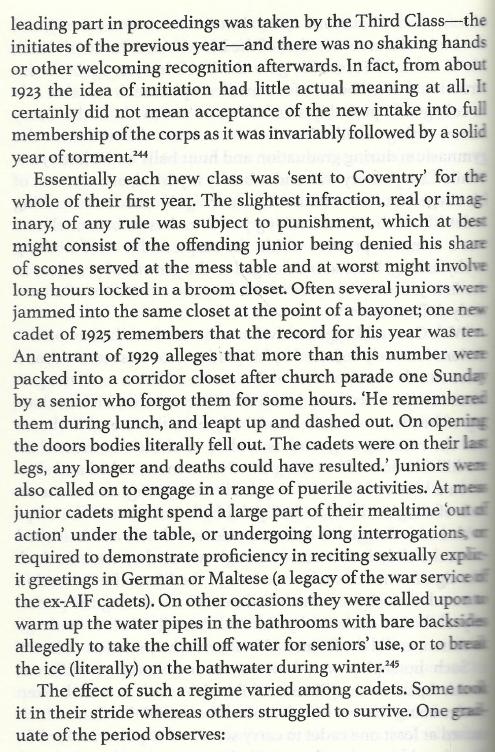
So the initial behaviour of the ‘one day only’ initiation ritual by senior cadets from 1912 toward junior cadets, as condoned by the first Commandant Bridges (1910-1914), had by 1923 been allowed to morph to “a solid year of torment” under subsequent commandants at RMC. This was just eleven years on. The Royal Military College had become a sadistic cult asylum of institutional abuse.
Chris Clark’s book extract at page 135:
Knighthood Review:
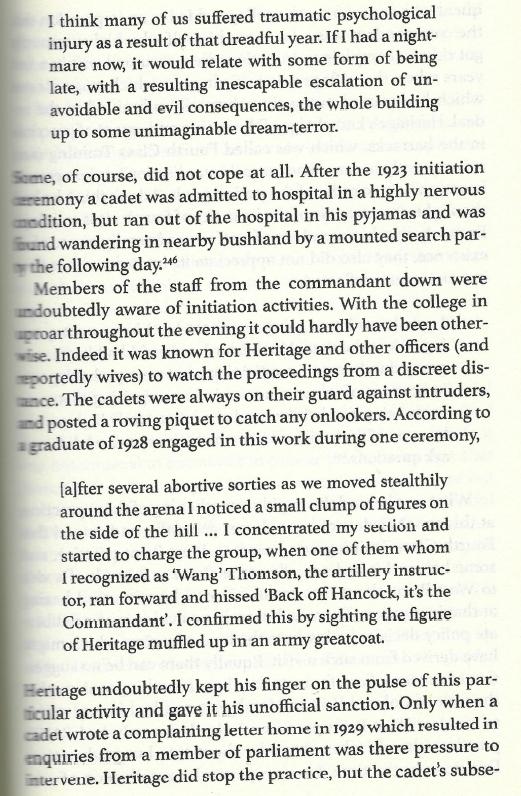
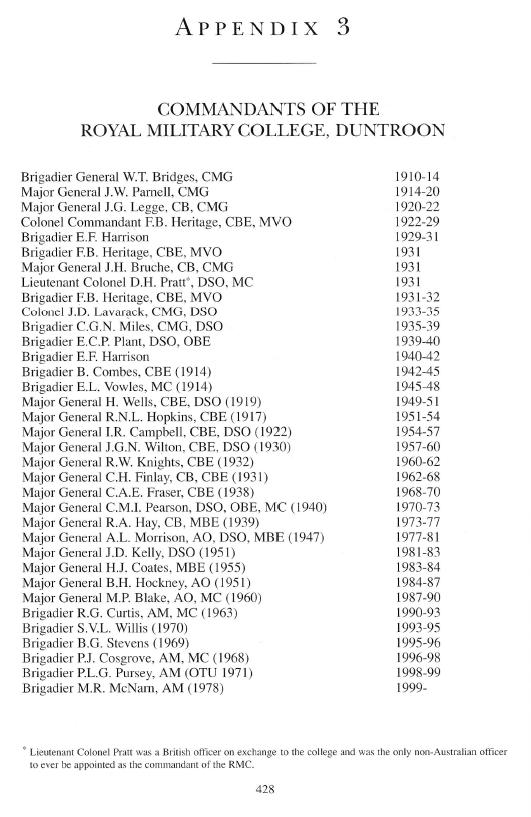
RMC Duntroon commandants must hold their heads in shame for the criminal abuse that they have knowingly encouraged and been ultimately responsible for. All RMC commandants are criminally culpable. Their postnominals are meaningless and they should be each stripped of them and those still living criminally investigated by independent Judicial prosecution and prosecuted, not by political QANGOs life DFO or DART.
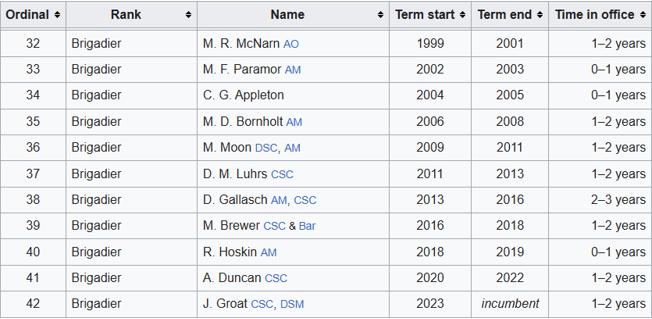
Chris Clark’s book extract at page 136:
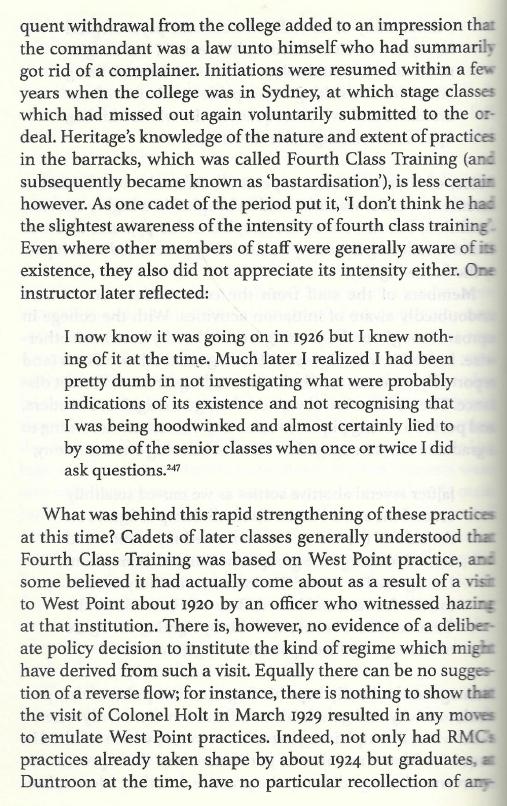
Knighthood Review:
RMC commandants have been and continue to be laws unto their own.
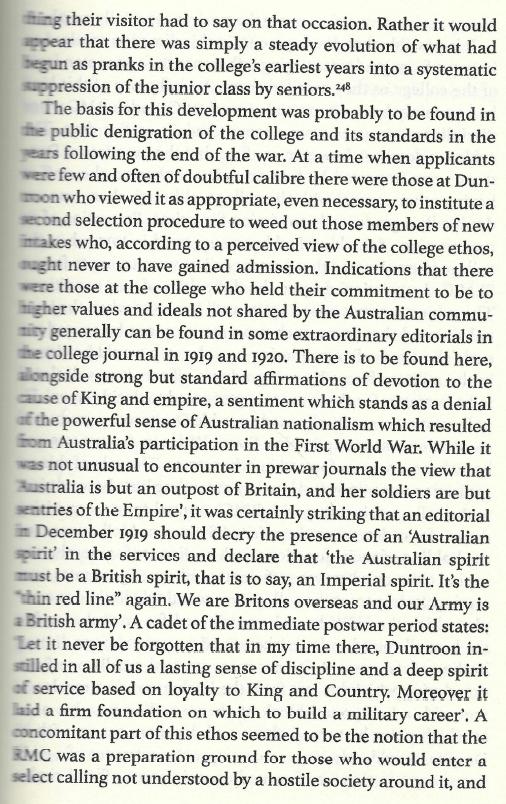
Chris Clark’s book extract at page 137:
The well-known yet cryptic hit song ‘Hotel California’ (released in 1977) by American music band The Eagles’ was a metaphor for the self-destructive hedonism, materialism, and excess of American culture and the music industry in the 1970s. Don Henley, who wrote most of the lyrics with Glenn Frey, described it as a song about the “dark underbelly of the American Dream” and “a journey from innocence to experience”.
The lyrics are intentionally ambiguous, designed to be a “cinematic montage” that allows for various interpretations. The hotel is a symbol of an alluring trap that one can never truly leave: “You can check out any time you like, but you can never leave”.
Yet the song’s symbolism resonates with the asylum nature of RMC Duntroon.
The primary interpretation by the band members themselves is a commentary on the corrosive nature of fame and fortune in Los Angeles. The band members were from middle-class backgrounds and experienced a shock when they arrived in the high life of Southern California. The “Hotel” is a symbol of the industry’s excess and the feeling of becoming a “prisoner of our own device”.
The song traces a narrative journey from a desert highway to a place of seductive luxury, representing the loss of youthful innocence as the narrator becomes entangled in a corrupt and superficial world. Many listeners interpret the song as an allegory for drug addiction, particularly to cocaine or heroin. Lyrics such as “warm smell of colitas” (Mexican slang for cannabis buds) and “mirrors on the ceiling” (a common surface for snorting cocaine) are cited as evidence. The line “You can check out any time you like, but you can never leave” is a powerful metaphor for the enduring grip of addiction.
Don Henley explained that the line “We haven’t had that spirit here since 1969” was a sociopolitical statement about the decline of the social activism and idealism of the 1960s, replaced by the narcissism and commercialism of the 1970s.
It deserves to be the theme anthem for RMC Duntroon. Two lines in the lyrics of this song ring true for many RMC junior cadets:
“We are all just prisoners here, of our own device”
“Last thing I remember I was running for the door I had to find the passage back to the place I was before”
Other interpretations, though unconfirmed by the band, include the hotel representing a mental institution (possibly Camarillo State Mental Hospital) or even the afterlife/hell, where people are trapped in a self-made purgatory.
Darren Moore’s documented account of abuse at RMC Duntroon is further captured in his book in Chapter 20 ‘Hazing’, which we reproduce and review in a separate article on this website:
Victims of Institutional Criminal Abuse at RMC Duntroon – ‘Hazing’ (subsequently ‘bastardisation’)
Army Officer Staff Cadet Julian Knight (CSC No 5266) was just one victim in 1987 at RMC Duntroon at the hands of gangs of senior cadets – one gang from Kapyong (RMC training) Company, but moreso another from his own Kokoda (RMC training) Company.
In the early 1980s, RMC Duntroon had come under further media scrutiny for recent reports by junior cadets who had resigned as a result of being subjected to the ongoing bastardisation culture by senior cadets flaring up again. This adversely impacted ADF recruitment and gave Duntroon a bad reputation. So, the ADF publicity machine (privately outsourced) ran a counter publicity campaign claiming that all bastardisation was banned at Duntroon and that such culture was part of its history and would not be tolerated. So all was good now at Duntroon in Canberra!!!

The Army (ADF) in its wisdom had just shut down its successful pragmatic Army Officer Cadet School at Portsea (Victoria) in December 1985. This resulted henceforth in the only sole place for training Australian Army officers was at Duntroon, centralised in the isolated political haven that is Canberra. In 1986, the ADF opened tri-service ADFA connected with UNSW (University of New South Wales), also in the political Canberran groupthink haven (located on the other side of the same hill, ironically named ‘Mount Pleasant’).
1987: Enter from Melbourne, Duntroon freshman (3rd Class) recruit Staff Cadet Julian Knight in January 1987. It is noteworthy that the senior cadet, Acting ‘Commanding Officer’ of Julian’s assigned Kokoda (training) Company was ex-ADFA and ex-Brisbane Grammar School bully Philip John Reed (CSC No 4592) – Julian’s nemesis.
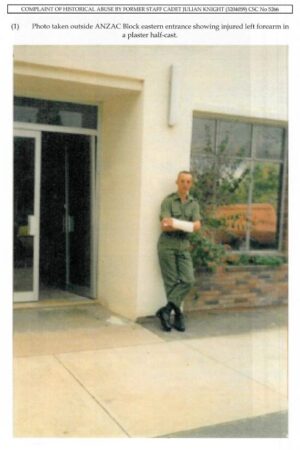
Welcome to Duntroon, eh?
Around 2014, a website was created entitled https://www.adfabuse.com/. We surmise that it was created by a lady called Jennifer Jacomb, since that was the contact email address for media on the website and on one of the posted media videos about Abuse in Defence.
By 2019, five years later, the content adding seemed to have dried up. Yet five years running active was a good stint. Many accounts of Defence abuse have been documented on the website.
The initial home started off sadly stating this:
“I was a victim of two and a half years of Torture and Abuse at the Royal Australian Naval College between 1983 and 1985.
It has scarred me ever since.
The purpose of this website is to:-
➢Provide aid and Support To Victims Of Torture and Abuse In The Australian Defence Force
➢Educate the Australian Electorate and people on:-
➢ The True nature of Torture and Abuse in the Australian Defence Force.
➢ How the abuse is being extended to innocent civilians
➢ How the abuse is weakening our Defence Force
➢ The true cost of the Torture and abuse to Australia.
➢ Recommend solutions to prevent this torture and abuse.
➢Encourage debate amongst Australian Electors and seek change.
➢Allow victims to share their stories.
➢Recognise those supporting the Victims.
➢ Address the flaws in the Defence Abuse Response Task Force (DART) and its (flawed and substandard) Reparation Scheme.
The Torture and Abuse in the Australian Defence Force has:-
✖ Created Damaged and Shattered Lives
✖ Mass Murderers like Julian Knight and the Hoddle Street Massacre
✖ Been extending itself to the civilian community.
It must stop.
Hence this website.
If we don’t band together, this latest inquiry will be just another whitewash, just like the first Voyager Royal Commission.”
[JulianKnight.com.au – The Knighthood:
We too encourage victims of ADF abuse to indeed “band together”. Here on this website, we with Julian Knight take up the ADF Abuse exposure baton, in respect to Jennifer’s outspoken bravery by going public with this commendable database; also out of the respect and sadness of the many victims and their families and friends, and including republishing most of the content of https://www.adfabuse.com/, and updating the record beyond that website’s last post of 2019 – (pun intended).
We comment that whilst the politicians of the day may consider compensating abuse victims that many years/decades hence that a gesture of token financial compensation ($5,000 to $50,000) for some victims dipping into taxpayer consolidate revenue is making amends. It is not. The moral test is how much is enough rape compensation? $50,000 to utterly destroy a life and drive suicide?
25 years incarceration for rape is the currently maximum penalty. Make it the mandatory minimum, starting with public servants, including in the ADF. Complicity by relevant leadership nee also to be held to account and if guilty, charged with found in charge need also be court martialled. Additionally, sufficient financial compensation to the victim? Well, what is the price of a human life? Life insurance sets around $1,500,000. Mandatory government 100% funded life-time trauma counselling to the victims might make politicians grow up a tad.
The perpetrators of abuse need to be investigated, held to account and convicted a serious criminals with custodial sentence of at least 12 months, so it stains their life. The ADF leadership needs a similar holistic investigation and overhaul of culture. It is incumbent on the Parliament of Australia to take a moral stand to the welfare of its citizens who join up in good faith to serve Australia in the ADF, that it enacts comprehensive legislation Australia-wide, with application to all ADF overseas postings of its personnel, to overhaul the antiquated Defence Force Discipline 1982 to set superior contemporary Australian social and moral standards throughout the ADF, to enact a First World leading framework of independent oversight into any abuse in the ADF with due enforcement by a new specialist federal court – a Public Service Standards Criminal Court, having fully powers of criminal incarceration of those found guilty of breaching the new superior laws.
A Royal Commission into ADF Abuse will be a good start, but only with terms of reference that the finding are mandatorily prosecuted by the Federal Court of Australia, not a political temporary farce that was DART, nor a poorly chartered and under-resourced political football that is DFO. In criminal law and criminal prosecution, the political QANGO that is DFO, was set up to avoid the proper judicial process, with more political posturing like ‘Sorry Day’ than criminal convictions nor any sign of behaviour change of accountability any time soon. DFO, like DART, has no legal teeth nor commitment so must be wound up ASAP as a costly waste of space. This in 2024 and has still has not happen due to lack of political will.
The only current (2025) politicians in Canberra whom have graduated from Duntroon are Andrew Wilkie MP and Andrew Hastie MP. Neither are part of the mainstream mob in executive power.
Do not join the ADF! There are many more sensible and safer alternative choices to achieve a satisfying leadership career .]
Until brass changes its spots…

Further Reading and References:
[1] ‘Duntroon : The Royal Military College of Australia 1911-1986‘, 1986, book by Chris Clark, published by Ligature Pty Limited, paperback 545 pages, Print ISBN: 978 16712 80863, eBook ISBN: 978 19227 30619, https://www.abebooks.com/book-search/title/duntroon-royal-military-college/author/coulthard-clark/signed/
[2] ‘Duntroon: The Royal Military College of Australia, 1911-2001‘, 2001, book by Darren Charles Moore, published by Royal Military College of Australia, Canberra, hardback 608 pages, ISBN: 1-876439-97-1.
[3] ‘Victims of Abuse in the ADF‘, website https://www.adfabuse.com/, by Jennifer Jacomb, Australia, active between 2014-2019.
[4] ‘Major General William Throsby Bridges‘, Australian War Memorial, https://www.awm.gov.au/collection/P11013172
[5] ‘Sir William Throsby Bridges (1861–1915)‘, by Chris Clark (no less), published in the Australian Dictionary of Biography, Volume 7 , 1979, online in 2006, https://adb.anu.edu.au/biography/bridges-sir-william-throsby-5355
[6] ‘Ewen George Sinclair-Maclagan (1868–1948)‘, by A. J. Hill, published in the Australian Dictionary of Biography, Volume 11 , 1988, online in 2006, https://adb.anu.edu.au/biography/sinclairmaclagan-ewen-george-8438
[7] ‘Victims of Abuse in Defence‘, Julian Knight’s website, https://julianknight.com.au/ (click link below)
[8] ‘Copyright and the Digital Economy (IP42)‘, Fair Dealing Exceptions, 16th August 2012, Australian Government, https://www.alrc.gov.au/publication/copyright-and-the-digital-economy-ip-42/fair-dealing-exceptions/