
It appears that behind the scenes and out of the media limelight, Julian Knight has been quietly awarded the ADF’s Australian Service Medal.
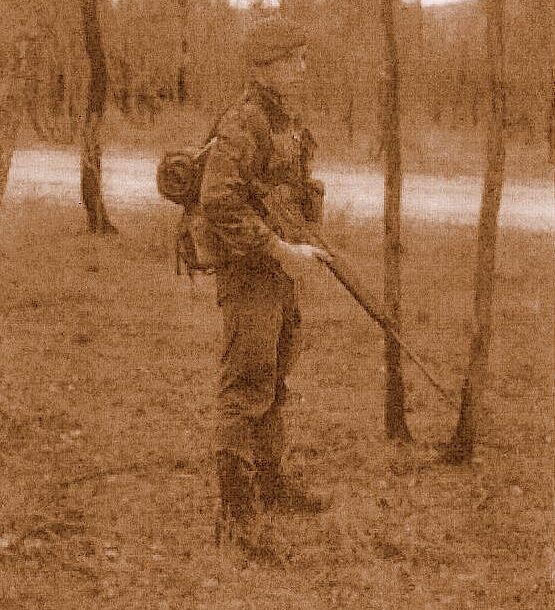
This is a military honour for time served in the Australian military, the Australian Army to be specific in Julian’s case (June 1982- July 1987), so five years of Australian Army military service.
Julian served voluntarily in every capacity from the time he joined and served with the School Cadet Corps in June 1982 advancing to the rank of Corporal, through to his voluntary part-time service in the Australian Army Reserve and then to his elite selection and training as an Officer Cadet at the Royal Military College at Duntroon in Canberra.
Read More:
The Australian Service Medal was approved in 1988 (by presumably the Australian Government), which… “may be awarded for service in, or in connection with a prescribed non-warlike operation.” (So after signing up).
Here t’is the obverse (medal front) and including the resplendent green and gold medal ribbon above…
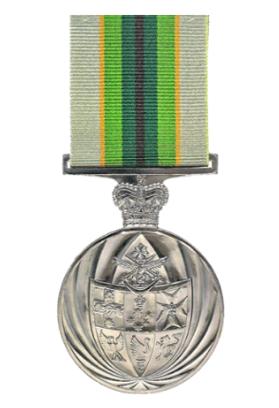
A closer examination of the “obverse” (front) of this medal displays symbolic emblems of Australia:
- The colour ribbon itself
- Medal Suspender – a horizontal metal slot to enable the coloured ribbon to be threaded above the engraved medal for wearing by the recipient
- The British (monarchy) Royal Crown (heraldic element) representing Australia’s Head of State (in 2026 being HRH King Charles III)
- The Australian Defence Force Joint Service Emblem
- A modified shield of the Australian Coat of Arms (all six states coats of arms)
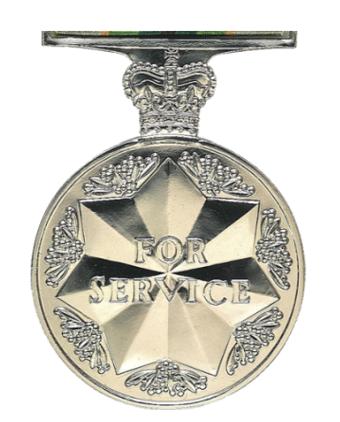
Also, a closer examination of the “reverse” (rear) of this medal displays a number of symbolic features that are actually rather apt for our Julian.
“The medal design features in nickel-silver with a modified shield of the Australian Coat of Arms surmounted by the Defence Force Joint Service Emblem super-imposed on a background of the meridians of longitude on the obverse.” “Obverse”? i.e. its ‘antithetical’ backside…
How lovely and all.
A closer examination of the “reverse” displays a number of symbolic features that we consider are actually rather apt for our Julian.
So, in top-down order (this medal being factory-forged with engravings and embossings in composite nickel-silver):
- Medal Suspender – a horizontal metal slot to enable the coloured ribbon to be threaded above the engraved medal for wearing by the recipient
- The British (monarchy) Royal Crown (heraldic element) representing Australia’s Head of State (in 2026 being HRH King Charles III)
- The round Medallion itself (double sided) of stardard medal size of 38mm diameter (there is a minature 16mm diameter version for uniform wearing)
- The Commonwealth Star (Federation Star/Seven Pointed Star/Star of Federation) is a seven-pointed star and heraldic device symbolising the Federation of Australia which came into force on 1 January 1901, originally as a six-pointed star. Six points of the star represent the six original states of the Commonwealth of Australia, while the seventh point represents the territories and any other future states of Australia.
- “FOR SERVICE” – a simple prominent engraved inscription in capitals letters – military service for the Commonwealth of Australia
- A wreath of seven identical Wattle mimosa flower inflorescence blossoms (symbolic motifs of the official national floral emblem of Australia, officially proclaimed on September 1, 1988 (Australia’s Bicentennary as a united federated nation).
More Info:
 Loading...

 Reload document
  Open in new tab
 Such that this medal award symbolic motifs are actually rather apt for our Julian. To date however, this medal is unclaimed due to Julian Knight’s ongoing illegal incarceration/detention as a political prisoner of the Victorian State Government since 2014.

Even ‘AOTY-2016’ LTGEN David Morrison proudly embellishes an Australian Service Medal in correct order left close to heart, like if one had received the VC…?
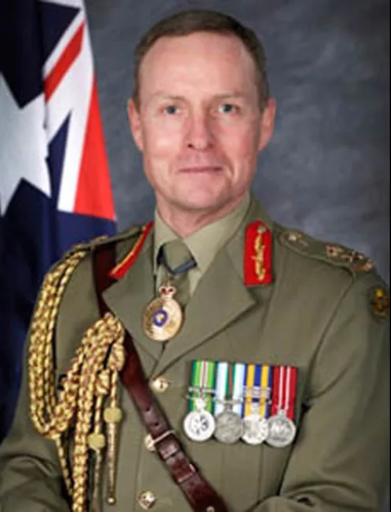
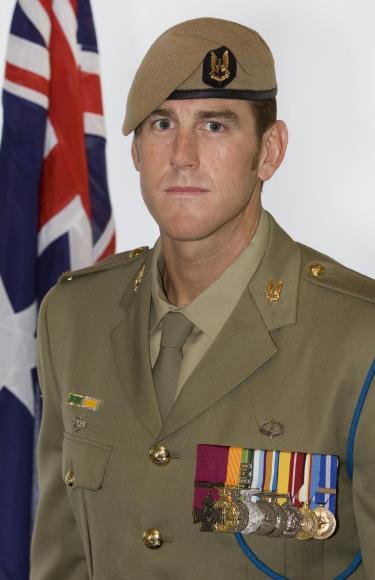
Military medals are worn on the left breast, ordered by precedence from left to right (viewer’s perspective), with the highest honor (e.g., Victoria Cross) placed furthest left. Australian honours, imperial awards, campaign/service medals, and authorized foreign awards are followed by state/territory awards on the right side.
Placement: Medals awarded to the wearer are worn on the left chest; ancestor’s medals are worn on the right chest.
Order of Precedence: Medals are mounted in a specific, descending order: National honours (e.g., Order of Australia), Imperial awards (pre-1992), Australian campaign/service medals, and finally authorized foreign awards (UN/NATO).
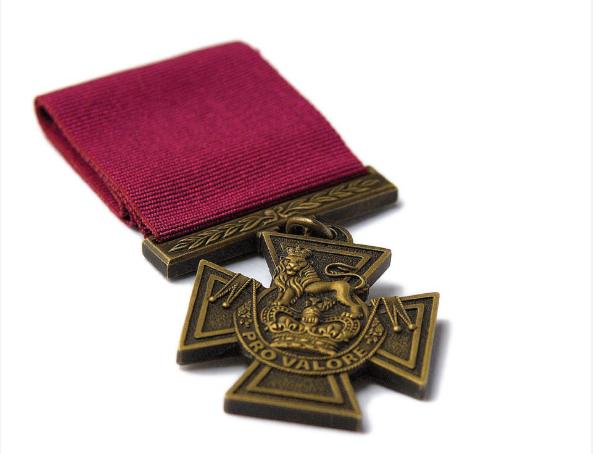
The way lesser Australian Service Medal was approved by the ADF from 1988 as a military service award for “prescribed non-warlike operation“.
ADF:
“Eligibility for an Australian Service Medal depends on the specific medal, but common requirements include completing a minimum period of service, which can be 30 days for operational medals or 15 years for long service medals. Other eligibility criteria include fulfilling an obligation, being honourably discharged, or being force assigned for operational duties. A nickel-silver clasp with the name of the theatre or action for which the award is made is presented with the medal, Australian territory included (invading enemy not necessary). The reverse (“obverse”) has clusters of mimosa blossoms surrounding a Federation Star bearing the inscription for Service.” https://www.defence.gov.au/adf-members-families/honours-awards/australian-awards/australian-service-medal
Yet what does “prescribed non-warlike operation” really mean? It would seem to basically translate to one signing up for military duty and then turning up for at least 30 days according to the medal’s eligibility requirements, but no more.
This author (ex-Army) may well deserve one too, for what it’s worth.