
We document on this website reports of the notorious Jedi Council Email Porn Scandal from 2010:
We quote the following insightful article of 2022 (which we fully reference to its author and publisher at the end of this webpage), it being published a decade after this ADF scandal; tragically one of the ADF’s many.
The article draws upon the ADF’s then management* response to it, and in the wake of subsequent ADF ‘scandals’, highlights the recurring problems within ADF concerning its failings in ‘moral command responsibility’ and attributes this to the abrogation of virtuous leadership tacit duty, yet not so far in such words. It’s an instructive read and scribed no less by a former RAAF pilot (which means having been a former member, Commissioned Officer, of the ADF brass)…
* [AUTHOR’S NOTE: We do not term the use of the word ‘management’ (which has many ‘styles’) to in any way being a form of ‘leadership’. Only leaders lead to be identifiable as being ‘leaders’, whereas managers just tell followers what to do. There is a term ‘mismanagement, but not ‘misleadership’ – that would be oxymoronic.]
‘The standard you walk past’
19th April 2022, by Dr Alan Stephens, military historian and defence analyst, and former RAAF pilot, https://johnmenadue.com/post/2022/04/the-standard-you-walk-past/

“The Australian Army has failed its own leadership test. Where does the buck stop?
In 2013 the then-chief of army, General David Morrison, shot to national fame when he circulated a video demanding an end to bullying, harassment and misogyny in his service.
‘The standard you walk past is the standard you accept’, Morrison told his troops. ‘If that doesn’t suit you’, he continued, ‘then get out’.
The favourable public response to Morrison’s dramatic challenge was a major factor in his selection in January 2016 as Australian of the Year.
In one of those odd quirks of history, the panel that chose Morrison was chaired by Ben Roberts-Smith, a former Special Air Service corporal, Afghanistan veteran and Victoria Cross recipient. Roberts-Smith currently is suing three newspapers and three journalists for defamation, claiming that articles published in 2018 contained false allegations of unlawful killings, bullying and domestic violence.
It seems that in taking his principled stance, General Morrison was calling-out decades of corrosion in his service’s leadership.
In November 2016, following years of rumours that Special Forces had been violating the laws of armed conflict in Afghanistan, the Inspector-General of the Australian Defence Force commissioned New South Wales Supreme Court judge Paul Brereton (who was also a major-general in the Army Reserve) to report on war crimes allegedly committed by the ADF between 2005 and 2016.
When Justice Brereton’s report was delivered in November 2020, Defence Minister Linda Reynolds stated that it made her feel ‘physically ill’. Brereton found evidence of thirty-nine murders of civilians and prisoners ‘by or at the instruction of’ Australian Special Forces. Twenty-five ADF personnel were involved in those unlawful killings, most of which occurred between 2012 and 2013 and had been covered-up.
An organisational culture that allows individuals to believe they can commit the kinds of crimes alleged by Justice Brereton doesn’t happen overnight. It’s years in the making.
On 11th April 2022, the ABC Television show ‘Four Corners’ aired a story about the Australian-led peace-keeping operation in Timor Leste twenty-three years ago. According to Four Corners, ‘secret documents revealed eyewitness accounts of New Zealand special forces soldiers who accused an Australian SAS soldier of brutalising the corpses of two [Indonesian] militiamen in the aftermath of a fierce firefight’. Australian Federal Police who examined the case believed the Indonesians may have been shot at close range in an act of revenge.
Four Corners also revealed the existence of a ‘secret interrogation centre’ where Indonesian detainees, including civilians and children, claimed they were ‘stripped, assaulted, [and] deprived of food, water and sleep’ by SAS operatives. Australian military investigators recommended charges of torture but none was ever made. Military police told Four Corners that what happened in Timor was ‘the start of a culture of impunity in the Australian SAS that led to alleged war crimes in Afghanistan’.
One of Justice Brereton’s more contentious findings was to attribute ‘moral command responsibility’ for what happened in Afghanistan primarily to ‘commanders at troop, squadron and task group level’. In the main, those men were corporals and sergeants. Corporals and sergeants are the war-fighting backbone of an army, but they’re also among the most junior ranks. Not a general, or brigadier, or colonel, or even a major, to be seen.
The Australian Army has some 5500 officers. Almost without exception, they are dedicated, professional, honourable men and women who joined-up out of a sense of duty. Yet it’s been left to a single junior officer, former SAS captain, Afghanistan veteran, now assistant Defence Minister, Andrew Hastie, to publicly condemn his service’s broken culture. Called as a witness before the Roberts-Smith trial, Hastie framed his evidence within a ‘Heart of Darkness’ metaphor. Parts of the SAS, he stated, were ‘shorn of the just-war theory … you [could] make up your own morality … killing had become a sacrament in itself’. Hastie ‘felt ashamed’ of what had happened.
An expert on the psychology of military behaviour has suggested that other, more senior officers failed to act because they were too high-up the chain of command to see anything, or their priority was simply to keep the mission ‘ticking over’. Those who ‘did try to do something’ were either marginalised or dismissed.
On the field of combat itself, there may have been a blurring of ‘mateship’ with ‘leadership’; senior officers lacked the ‘street cred’ of junior but decorated patrol commanders; there may have been an insidious shift from ‘unacceptable behaviour’ to war crimes; and those crimes may have been confused with being a ‘good soldier’.
It might seem easy for outsiders who haven’t experienced the fearful circumstances of face-to-face combat to criticise the actions of those who have. But that’s why we have laws of armed conflict, a formal system of command, and endorsed Army ‘core values’; and it’s why the Australian Army values leadership above all other qualities.
It was former US president Harry S. Truman who popularised the leadership truism, ‘The Buck Stops Here’ – that is, at the top. It’s the most fundamental tenet of taking responsibility. It’s not reasonable to expect senior commanders to control every single event that happens on the ground. But it is reasonable to expect them to shape their force’s culture and to enforce its code of conduct.
If our generals didn’t know what was happening, they should have; and if they did know what was happening, they should have done something about it.
That was General Morrison’s point. The standard you walk past is the standard you accept.”
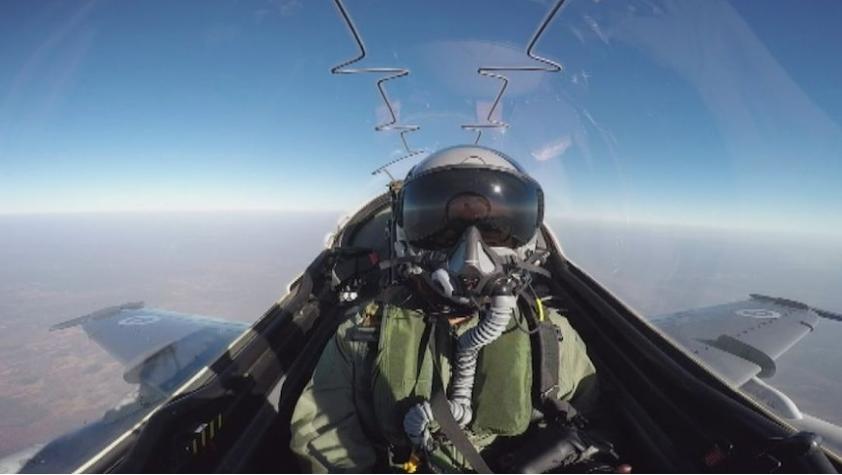
LTGEN David Morrison was Chief of Army (June 2011 – May 2015). Having been born May 1956, his age range during that appointment was 56 – 59, so just under four short years; merely a stint like a university degree. Just a four year term is hardly sufficient time to complete a task of Army leadership – the likes of (without military speak) the suggested following:
- Knowing your brief (including the politics at that level)
- Assessing the situation and priorities and glaring problems within
- Identifying the role’s scope, mission, resources, limits (in management academics, it’s termed ‘Portfolio Management’)
- Identifying the problems, Risk Management, a SWOT Analysis (Army wide)…he’s delegated as ‘Chief of Army’ right?
- Getting to know your people, capability, resources, funding, support, alliances, Australia’s real foes
- Devising best practice leadership styles to suit the role(s)
- Consultation – ADF-wide, Cabinet, Allies
- Problem Solving
- Restructure, resource and training for contemporary war-fighting/immediate threats
- Re-appointments/Delegations – specialist teams/Army Command re-group
- Acting – any justified Change Management as required
- Portfolio Management
- Australian Military War-Readiness ASAP!
- Etcetera…
Morrison’s role prep in International Force for East Timor (INTERFET) was to the extreme responsibility of commanding WWII military defence like that of British PM Churchill, and so was Morrison’s military training and experience prep sufficient for Chief of Army? Perhaps his short degree-length tenure suggested otherwise. Morrison’s role prep is briefly summarised here: https://en.wikipedia.org/wiki/David_Morrison
- Who preceded him and for what term?
- What has changed for the better since, if anything?
- Why did the ADF a decade prior, not investigate the 1987 Duntroon bastardisation of Julian Knight that particularly contributed to Hoddle Street?
- Why did the ADF not publicly release the 1998 Grey Review into ADFA rape culture? This scandal out of military training (ADFA) has become yet another consequence of the ADF’s unchecked ‘groupthink‘ culture of systemic abuse in (and by) the Australian Defence Force to both its own serving members and to enemy and to foreign civilians. Such culture and behaviour is contrary to best practice military conduct, whatever codes are printed (but not read).
We document on this website the ADF abuse as institutionalised as our webpage and its detailed internal links and referencing reveal…
So, what is ‘Groupthink’?
‘Groupthink‘ has become a composite term in the contemporary academic discipline of ‘Management Theory’ since 1972 – that is, thinking and acting with and only with the group collective thought process for the benefit and sole purpose of maintaining the cohesion of the particular group. It is an act of insisted mandatory compliance by each member of such a group, irrespective of the ethics or consequences. Such is our interpretation.
Another interpretation of ‘Groupthink’:
by Google AI (aka anonymous sources):
“Groupthink is a psychological phenomenon where the desire for group cohesion and harmony overrides critical analysis, leading to irrational or dysfunctional decision-making. Coined by Irving Janis in 1972, this state causes members to suppress dissenting views, self-censor, and ignore alternative viewpoints, often resulting in poor outcomes.
Key Characteristics and Causes:
- High Cohesion: Members value group unity over critical thinking.
- Pressure to Conform: Direct pressure is applied to anyone who questions the group’s arguments.
- Illusion of Invulnerability: The group believes it cannot fail, leading to excessive optimism and high-risk taking.
- Self-Censorship: Members hold back their own dissenting opinions or counterarguments.
- Mindguards: Certain members protect the group from adverse information that might shatter their complacency.
[So, it’s RMC Duntroon all over!]
Consequences of Groupthink:
Groupthink leads to poor decision-making processes, including:
- An incomplete survey of alternatives
- Failure to examine the risks of the preferred choice
- Poor information search
- Selective bias in processing information.
Examples include historical fiascoes like the ‘Bay of Pigs’ invasion and the 2008 Lehman Brothers collapse.
Strategies to Avoid Groupthink:
- Encourage Dissent: Assign a “devil’s advocate” to challenge ideas.
- Leader Neutrality: Leaders should withhold their opinions initially to avoid influencing the group.
- Outside Experts: Invite external experts to challenge the group’s views.
- Subgroups: Break the team into smaller groups to discuss the issue separately.
- Create Safety: Foster an environment where members feel safe to voice doubts.
In the case of RMC Duntroon (since 1911) and adjoining ADFA (since 1986), the group-think mindset is similar because the two colleges have a shared culture that has manifested to comparable scandals of impropriety, violence, abuse and criminality to the extent of institutional cultism.
That institutional cultism has manifested over decades with the following characteristics:
(1) Military Classism: A class-based organisational structure by hierarchical rank in top down order as follows: (A) Commissioned Officers, (B) Non-Commission Officers, (C) Cadets (Classes 1, 2, and 3 by only a few months). (A) being Gods, 3rd Class Cadets being Plebs rife for sadistic abuse inflicted by all the above. Each class functions in a disparate silo mentality, shunning interactive civil communication save by issuing orders top down, shunning any sharing of information, knowledge or experience downwards. So each class effectively is antagonistic enemy within of the other classes within the same training unit – Infantry company, platoon, section. So engendering dysfunctional derision and hate between classes within the same unit.
(2) Authoritarian Management: A management style that is far from any definition of leadership (a leader here being only to exist to practice with followers whom must follow at will and whim). This old fashioned and antiquated approach harks back to yesteryear 18th Century British Army; so defined by strict, top-down, command-and-control structures, emphasizing unquestioning obedience, rigid discipline, and hierarchical, rank-based authority. This dogma encourages (demands) superiors to issue direct orders to subordinates (irrespective of the immorality, pettiness, futility, harm) discouraging initiative in favour of following established procedures and ensuring compliance. Historical practices that have manifested into rituals, austere bully boy compliance, petty contrived rules/lore based including ridiculously anal uniform dress standards, and regular punishment for minor infringements
Such ‘old school’ British Army methods of training and discipline and acculturation can well be equated with Nazism.
(3) Institutional Bastardisation of Junior Cadets
Senior Cadet bullying of Junior Cadets at RMC Duntroon since its year of inception (1911) continues to be institutional. Adjacent ADFA since its inception in 1986 is a copycat culture. Training platoons’ in-barracks bullying, hazing, and bastardisation is historical and the Officer class know of it and are deliberately not present after hours in platoon barracks, so the practice is encouraged to perpetuate out of sight and out of mind.
It is a form of negative leadership, which is academically referred to as ‘toxic leadership’ – a combination of self-centered behaviours and attitudes that destroy subordinate morale, undermine unit cohesion, and damage mission effectiveness. It involves abusing power to promote personal advancement over team welfare, characterized by arrogance, intimidation, micromanagement, and a disregard for personnel well-being, which ultimately degrades readiness and causes long-term psychological harm. Toxic leadership persists because of a culture that allows such behaviour to go unchecked and because senior leaders fail to intervene. They criticise, ridicule, interrupt and ignore anybody who challenges them. As a result, the team actively avoid engaging directly with their leader. Finally, it is common for toxic leaders to oppose diversity of thought and to surround themselves with like-minded individuals.
Key Characteristics and Behaviours:
-
- Abuse of Authority: Using rank to intimidate, coerce, or bully subordinates
- Narcissistic Ego: Prioritizing personal reputation and advancement over the team’s success
- Poor Communication: Using vulgar language, creating an unapproachable atmosphere, and discouraging feedback
- Self-Serving Motivation: Taking credit for successes while blaming subordinates for failures
- Lack of Empathy: Ignoring the personal and professional needs of team members.
Impact on the Organization:
-
- Reduced Readiness: Toxic leaders hinder unit performance, resulting in damaged equipment or failed missions
- High Turnover: Qualified personnel often leave the service as a result of toxic environments
- Psychological Strain: Subordinates operate in fear, leading to high stress and a “walking on eggshells” climate.
(4) Colleges both Closed Shops
Both Duntroon (since 1911) and ADFA (since 1986) are adjoining ab initio military training bases – ‘closed shops’ hidden from public oversight – what goes on in barracks stays in barracks! This allows for and facilitates accountability of senior cadet abuse of junior cadets nightly. The barracks accommodation at both RMC Duntroon and ADFA are close living quarters. All ADF officers off site after dark – so the Senior cadets had free reign to commit their sadism on fellow junior (freshmen/freshwomen) cadets in their own platoon!
“RMC Duntroon is not about instilling best practice proactive positive leadership in the ADF; it is only about conditioning its antiquated perverted cultural will, since its misguided Canberra inception of 1911.”
– by Steven Ridd, CPL, an informal member of ‘The Knighthood’; former RMC staff cadet (as Aviation Helicopter Cadet) of the January 1987 Intake, voluntarily resigned March 1987.
Further Reading and References:
(1) ‘The Standard You Walk Past‘, 19th April 2022, by Dr Alan Stephens, military historian and defence analyst, and former RAAF pilot, https://johnmenadue.com/post/2022/04/the-standard-you-walk-past/, Further Reading: ‘Pearls and Irritations’ (John Menadue’s Public Policy Journal (website), https://johnmenadue.com/john-menadue/ [NOTE: ‘Pearls and Irritations’ is an Australian platform for the exchange of ideas from a progressive, liberal perspective, with an emphasis on peace and justice. “We publish informed analysis and commentary on issues that matter to Australians, with a focus on politics, public policy, foreign policy and world affairs, defence and security, the economy, media, the arts and religion.” It is recommended reading].
(2) ‘Effects of Groupthink on Tactical Decision-Making‘, 1st January 2001, by Phillip M. Johnson, (Defence Technical Information Center (DTIC), School of Advanced Military Studies, (U.S.) Army Command and General Staff College, Fort Leavenworth Army base, Kansas, USA, .
Abstract:
(Academic Fields: Psychology, Military Operations, Strategy and Tactics)
“Irving Janis introduced the theory of groupthink in his classic study Victims of Groupthink in 1972. He attempted to determine why groups, often consisting of individuals with exceptional intellect and talent, made irrational decisions. He concluded that groups often experienced groupthink, a mode of thinking that people engage in when they are deeply involved in a cohesive group, when the members striving for unanimity override their motivation to realistically appraise alternative courses of action.
His major proposition was groups that displayed groupthink symptoms were more likely to produce poor decision outcomes. His initial works sparked an explosion of research into how group behaviors, biases, and pressures affect group decision-making.
Groupthink has become a widely studied and accepted phenomenon. Groupthink is a widely utilized theory in social psychology, organizational theory, group decision-making sciences, and management fields. Research into the phenomenon of groupthink is a pertinent area of study that involves understanding how group processes influence the making of decisions. This includes the analysis of the conditions under which miscalculations faulty information processing, inadequate surveys of alternatives, and other potentially avoided errors are most probable. Many professional fields have recognized the impact of group behaviors, and specifically the phenomenon of groupthink, on decision-making.
Unfortunately, US Army doctrine does not address how group behaviors influence decisions. This is a critical weakness in doctrine since tactical level decision-making and planning occurs in a collaborative group environment. The military decision making process, the Army’s doctrinal decision-making process, relies on analysis, inputs, and recommendations from the commander and staff.”
(3) ‘Understanding Groupthink: The Case of Operation Market Garden‘, 1st September 2015, by David Patrick Houghton, The US Army War College Quarterly: , Volume 45 Number 3 Parameters Autumn 2015, Article 9, US Army War College Press, https://share.google/VV2K8mdWCGrcHIrAu
[NOTE: (“The United States Army War College is a U.S. Army staff college in Carlisle Barracks, Pennsylvania, with a Carlisle postal address, on the 500-acre campus of the historic Carlisle Barracks”, https://en.wikipedia.org/wiki/United_States_Army_War_College. We include a copy of that academic paper as follows (16 pages):]
 Loading...

 Reload document
  Open in new tab
 (4) ‘How JFK Inspired the Term ‘Groupthink’, 20th February 2024, Neuroleaderhip Institute, New York City, USA, https://www.neuroleadership.com/articles/how-jfk-inspired-the-term-groupthink-copy
“The Bay of Pigs Invasion, a political move widely viewed as a textbook case of failed decision-making, has helped psychologists study major organizations.
A few weeks after John F. Kennedy was elected President of the United States, the CIA approached him about a plan set in motion by his predecessor, Dwight Eisenhower, for a secret military operation that later came to be known as the Bay of Pigs Invasion.
The year was 1960, just months after a communist revolutionary named Fidel Castro overthrew his government in an armed rebellion, installing himself as dictator and turning Cuba into a one-party state.
Fearing a rising tide of communism across the globe, President Eisenhower had approved a plan, devised by CIA Director Allen Dulles, to land in a swampy area of Cuba’s southern coast in hopes of sparking revolt against Castro and overthrowing the new communist régime. The only question was whether Kennedy would choose to proceed with the plan.
The decision he ultimately made came to be known as one of the most embarrassing foreign policy blunders of all time — and became the archetypal example of “groupthink,” the tendency of groups to become so swept up in a spirit of camaraderie and belonging that they stifle their doubts, silence dissenters, and rush to consensus without fully analyzing ideas.
Groupthink in organizations
Groupthink is lethal not just for policymakers, but also for companies, leading to bad decisions throughout the corporate world, from everyday business gaffes to large-scale corporate fraud and global financial bubbles. Today, the phenomenon has been blamed for many of the most visible collapses in the history of business, from Lehman Brothers to Enron to Worldcom to the subprime mortgage bubble leading up to the global financial crisis.
For Kennedy, the consequences were so catastrophic that observers couldn’t help but wonder how such a monumentally bad decision could have been made — especially since Kennedy spent days discussing it with a team of famously brilliant advisors, including Robert McNamara, Robert Kennedy, Arthur Schlesinger, Jr., Allen Dulles, and about 40 others.
The plan they approved went something like this. Around 1400 Cuban exiles, stationed in Guatemala and already training with the CIA, would storm the beachhead at Bahía de cochinos, armed with American artillery, and march on Havana. Inspired by American heroism, the Cuban people would rise up against Fidel Castro, the encroaching tide of communism would be turned, and Kennedy would glory in a righteous victory against a despicable enemy.
What happened instead was that resources that were meant to be made available were pulled at the last moment. The 1400 Cuban exiles who landed on the beach encountered a superior Cuban force of 20,000 soldiers. As they approached the landing site, they looked for the American fighter planes and naval destroyers they were promised. But that air and naval support never arrived. Without ammunition or an escape route, more 1200 Cuban exiles were taken prisoner. The rest were killed.
The whole thing was over in three days, Castro became a hero to his people, and Kennedy was humiliated on the world stage. Ultimately, the Bay of Pigs Invasion paved the way for Cuban and Russian partnership and a deepening of the Cold War.
“There were 50 or so of us, presumably the most experienced and smartest people we could get,” Kennedy would later recall. “But five minutes after it began to fall in, we all looked at each other and asked, ‘How could we have been so stupid?’”
Politics and psychology collide
Kennedy wasn’t the only one asking that question. The fiasco attracted the attention of Irving Janis, a Yale psychologist who studied group cohesion. Janis became interested in understanding how a team of self-evidently brilliant people can pool their intellectual powers and still somehow arrive at such an unquestioningly catastrophic decision.
Janis set out to identify a psychological mechanism that could explain the disastrous decision. After years of research, he published a book proposing the existence of a previously undiagnosed, unnamed, and unknown problem afflicting groups tasked with making decisions: a phenomenon he termed “groupthink.” When groups work together to make a decision, Janis posited, they suffer from a process problem that, although unnoticed by the members of the group, nevertheless distorts their perception of reality and leads to reckless, outrageous decisions.
In the Bay of Pigs Invasion, Janis discovered, the problem was that although Kennedy’s advisors had good reason to think the mission would fail, they never voiced these concerns. Although they harbored private doubts, they “never pressed, partly out of a fear of being labeled ‘soft’ or undaring in the eyes of their colleagues.” In the words of Arthur Schlesinger, Jr., one of the advisors present at the meetings, Kennedy’s “senior officials… were unanimous for going ahead… Had one senior advisor opposed the adventure, I believe that Kennedy would have canceled it. No one spoke against it.”
Groupthink was at least partially responsible, Janis believed, for other foreign policy fiascoes as well: the decision by American military commanders in 1941 to ignore warnings of a surprise attack by Japan at Pearl Harbor; the decision in 1950 by Harry Truman and his advisers to cross the 38th parallel into North Korea; and the decision by Lyndon B. Johnson and his advisers in the late 1960s to escalate American involvement in the Vietnam War.
Groupthink goes mainstream
After Janis’ study, the word groupthink entered the lexicon, and the concept became an everyday concept in political science, psychology, and management. In the decades since Janis first published his article, psychologists have blamed groupthink as a factor in the Watergate scandal, the Iran-Contra affair, and both the Challenger and the Columbia space shuttle explosions.
Today, groupthink is widely blamed not just for foreign policy fiascoes, but for bad decisions throughout the corporate world, from everyday decision making on teams and executive boards to global financial bubbles and large-scale corporate fraud — but it all started with a bad decision in the White House by a new and inexperienced president.
The lesson for businesses is that any group of people that makes decisions is vulnerable to groupthink. Fortunately, there is a solution: diversity. For more information about how diversity can help a group to encourage dissenting opinions, analyze information more rigorously, and consider alternative options, you can check out our new white paper, “The Business Case: How Diversity Defeats Groupthink.”
This article is the third installment in NLI’s new series, Groupthink: The Master Class, a 6-week campaign to help leaders understand the science behind identifying — and eliminating — groupthink.”
(5) LTGEN David Morrison, https://en.wikipedia.org/wiki/David_Morrison